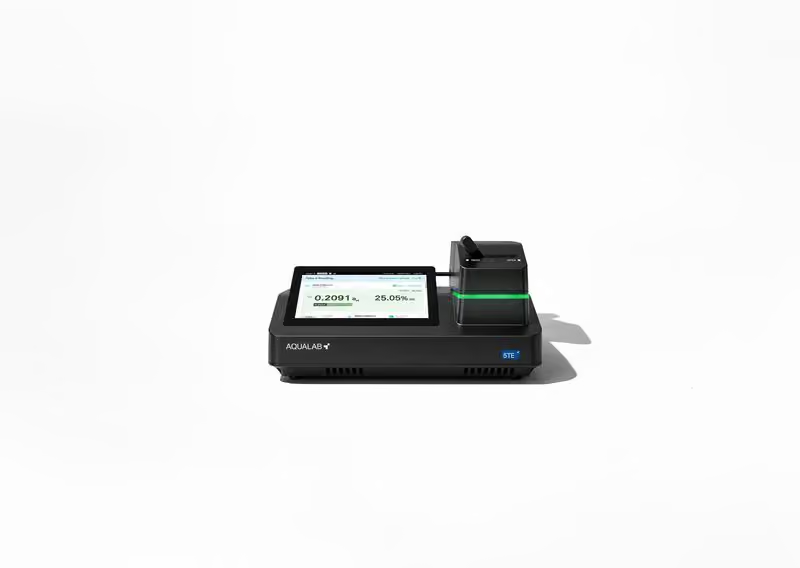
Introduction to water activity
Water activity (aw) is the ratio of the vapor pressure of water in a product to the vapor pressure of pure water at the same temperature. It is directly related to the microbial susceptibility of food products and to many reactions that end shelf life. Learn why water activity measurements are so powerful.

Water activity (aw) is about energy.
For a cheap ingredient, water can cause a lot of expensive problems: microbial growth, mold, loss of texture, caking and clumping, rancidity, and vitamin loss. The best way to understand water in your product is to learn how to measure water activity.
What is water activity?
Water activity: it’s all about energy. Water activity describes the energy of water in a product. It is the ratio of the vapor pressure of water in the sample (p) to the vapor pressure of pure water (p0) at the same temperature.
Take a glass of water and a dry sponge. Dip the corner of the sponge into the glass of water. The water will move from the glass into the sponge. Water activity is the force that causes the water to move into the sponge. To understand it better, think about how the water in the sponge is different from the water in the glass.
The water in the glass is free, but the water in the sponge is anything but free. The water in the sponge has a lower energy state than the water in the glass. Water will flow into the sponge, but to get it back out, we must do work by squeezing the sponge. The water in the sponge also has a lower vapor pressure, lower freezing point, and higher boiling point than the water in the glass. They are different in ways we can measure and quantify.
The total change in energy is the sum of matric and osmotic effects.
How do you measure water activity?
Seal a sample in a container. At equilibrium, the relative humidity of the air in the headspace equals the water activity of the sample.
If we enclose a sample in a sealed container, the relative humidity of the air in the headspace will equilibrate with the water activity of the sample. We can then measure the relative humidity of the headspace to know the water activity of the sample. This is the most reliable answer to the question of how to measure water activity.
What are secondary methods for measuring water activity?
Capacitance and resistance hygrometers are secondary methods. They relate an electrical signal to relative humidity and must be calibrated with known salt standards.
Like early water activity meters, most modern instruments use electrical capacitance or resistance hygrometer sensors to measure humidity in the headspace above the sample.
With these sensors, the equilibrium relative humidity (ERH) is equal to the sample water activity only as long as the sample and sensor temperatures are the same. Accurate measurements require good temperature control or measurement. Capacitance sensors use a simple design and are often used in relatively inexpensive water activity meters.
Why is dew point a primary method?
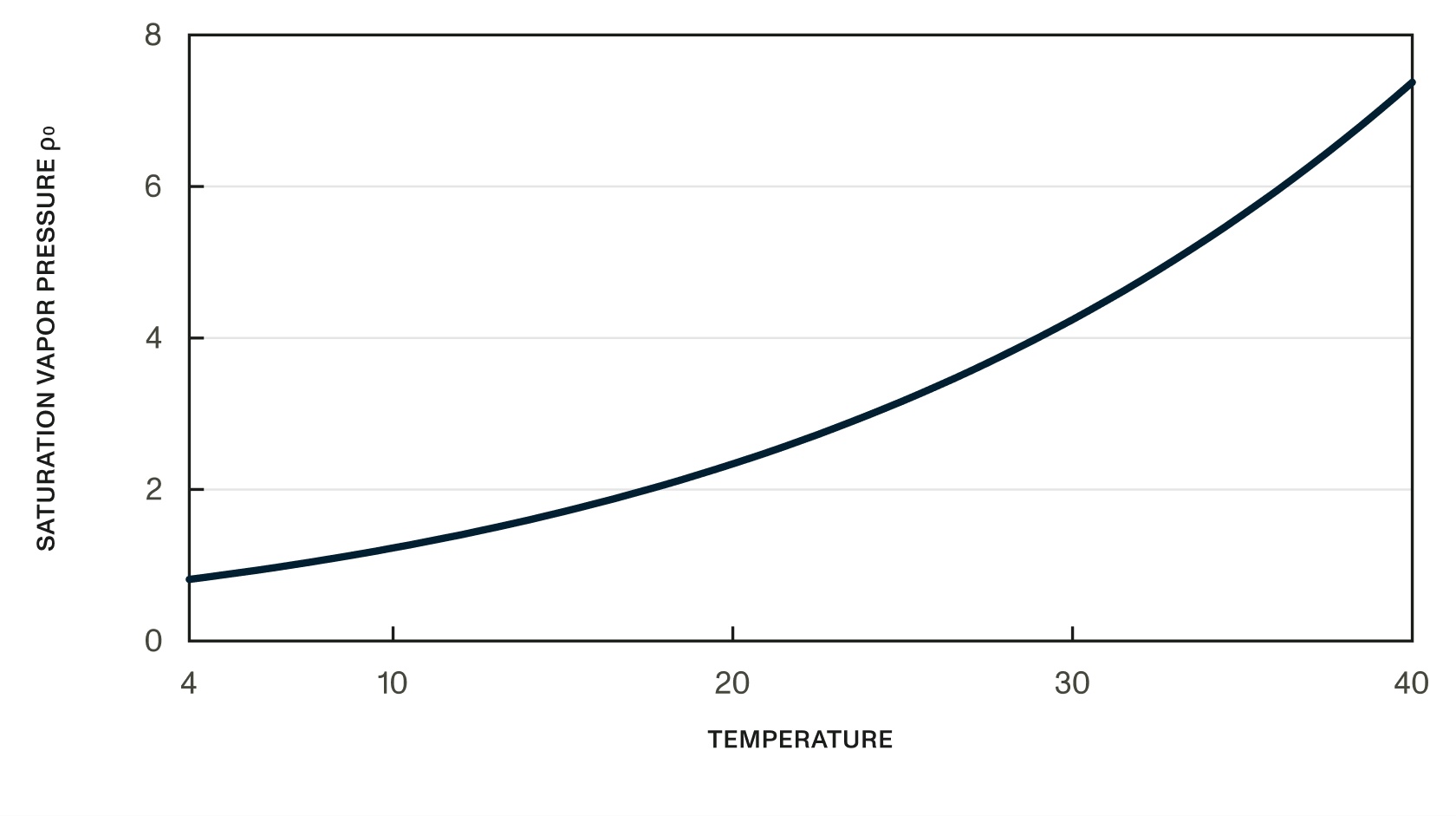
The best methods to measure water activity (aw) are primary methods that use the ratio p / p0. P0 (the saturation vapor pressure) depends only on the temperature of the sample, so it is possible to measure p0 by measuring the temperature of the sample. P (the vapor pressure of the water in the sample) can be measured from the sealed headspace above the sample. The most accurate way of measuring that vapor pressure, and one that goes back to first principles, is to measure the dew point of the air.
Does a dew point water activity meter need calibration?
No. A chilled mirror dew point sensor is a primary method based on temperature, so calibration is not necessary. Users should measure a standard salt solution to verify that the instrument works correctly.
The major advantages of the dew point (or chilled mirror dew point) method are speed and accuracy. The chilled mirror dew point sensor is a primary measurement method based on fundamental thermodynamic principles. Chilled mirror water activity meters make highly accurate (±0.003 aw) measurements, typically in about 5 minutes. For some applications, this speed allows manufacturers to perform at-line monitoring of water activity. To compare instruments, use the AQUALAB product selector.
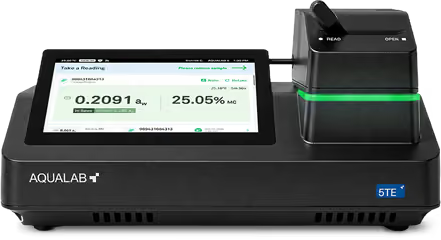
AQUALAB 5TE
Water activity and moisture content in a single 60-second test.
- MC + aw in one
- Results in 1 minute
- Accurate to ±0.003 aw
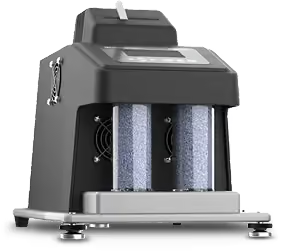
AQUALAB VSA
Make detailed moisture maps to predict, understand, and control moisture’s effects. High-resolution moisture sorption isotherms for shelf life prediction.
- Isotherms in <48 hours
- 200+ data points / isotherm
- 5 min. test setup
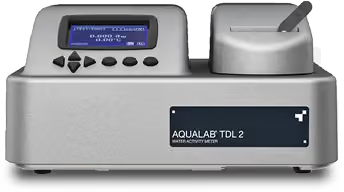
AQUALAB TDL 2
Precise water activity readings for volatile and complex samples.
- Tunable diode laser sensor
- Read highly volatile substances
- Accurate to ±0.005 aw
Why use water activity for QA/QC and formulation?
Water activity is a thermodynamic measure of the energy of water in a product. Why should your company learn how to measure water activity? It is directly related to the microbial susceptibility of food products and to many reactions that end shelf life. Because it is measured on a scale with a known standard, it is particularly well suited to being a safety and quality specification.
Master the basics
Get the essentials of water activity condensed in this 20-minute webinar with Mary Galloway, Application Scientist at Addium, Inc. You will learn:
- What water activity is
- How it is different from moisture content
- Why it controls microbial growth
- How water activity can help you control moisture in your product
Watch the webinar: Water activity 101 →
Frequently asked questions
How long does a water activity measurement take?
Chilled mirror dew point meters typically measure water activity in about 5 minutes, with an accuracy of ±0.003 aw.
Does a water activity meter need calibration?
Capacitance and resistance sensors must be calibrated with known salt standards. Chilled mirror dew point meters do not need calibration, but users should measure a standard salt solution to verify the instrument.
Why does temperature matter when measuring water activity?
With capacitance sensors, the equilibrium relative humidity (ERH) equals the sample water activity only when the sample and sensor are at the same temperature.
Drive your company’s total moisture
Learn how