Water activity meter
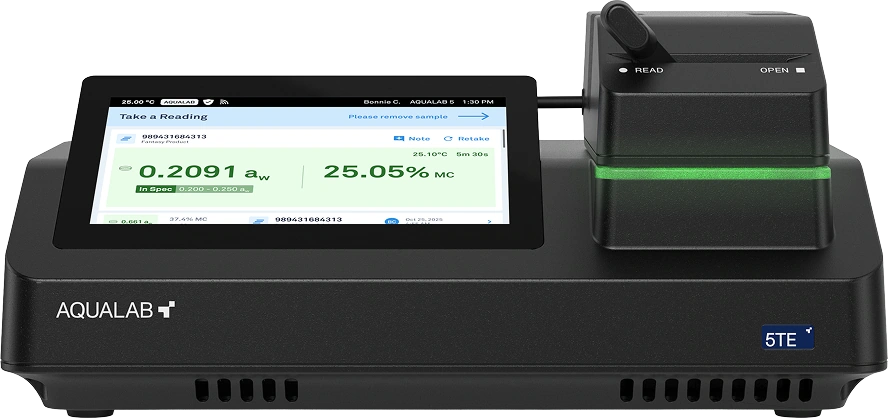
AQUALAB 4TE
Fast, precise water activity measurements you can trust.
.avif)
Designed for production, QA, and R&D
AQUALAB 4TE uses chilled mirror dew point technology to directly measure water activity, giving food, pharmaceutical, and industrial teams fast, reliable results for product safety, shelf life, and quality control across any environment.
0.003aw
Water activity accuracy
≤5min
Typical read time


Predict, adjust, control
AQUALAB 4TE delivers direct, primary water activity measurements using chilled mirror dew point sensing, providing fast, repeatable results that support confident decisions across production lines, labs, warehouses, and field environments.
Direct dew point measurement
The chilled mirror dew point sensor measures water activity directly—not correlated parameters—delivering superior accuracy, stability, and confidence compared to capacitive or indirect sensing technologies.
Fast, repeatable results
AQUALAB 4TE produces stable water activity readings in five minutes or less, enabling quicker verification, reduced bottlenecks, and consistent results across users, shifts, and locations.
Measure anywhere
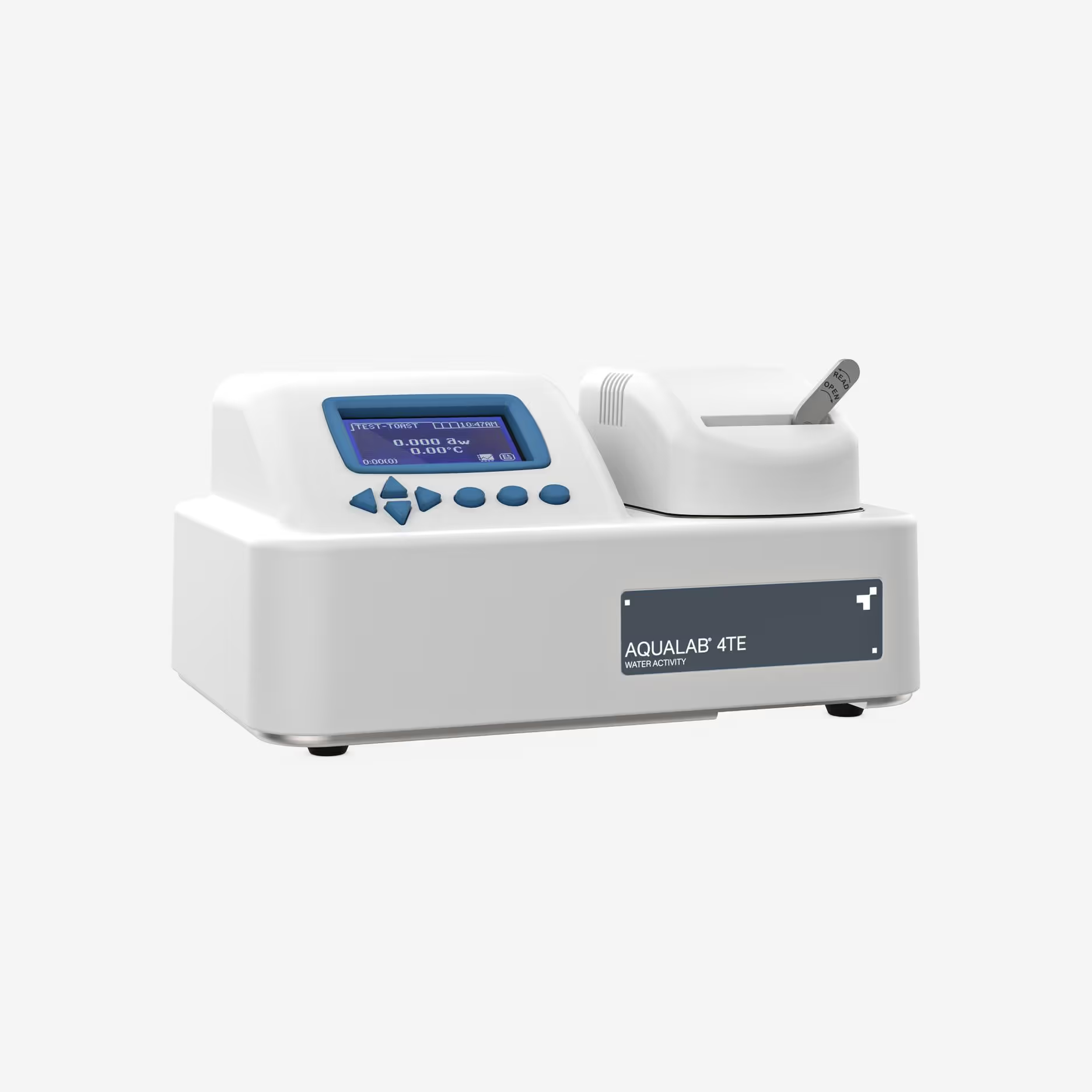
Internal temperature control and rugged construction allow accurate water activity testing at the line, receiving dock, storage facility, or lab—without sacrificing measurement quality.
Proven industry standard
Used by 92% of the top 100 food companies, AQUALAB instruments are trusted worldwide for moisture management throughout formulation, production, QA, and finished product verification.
Simple to use
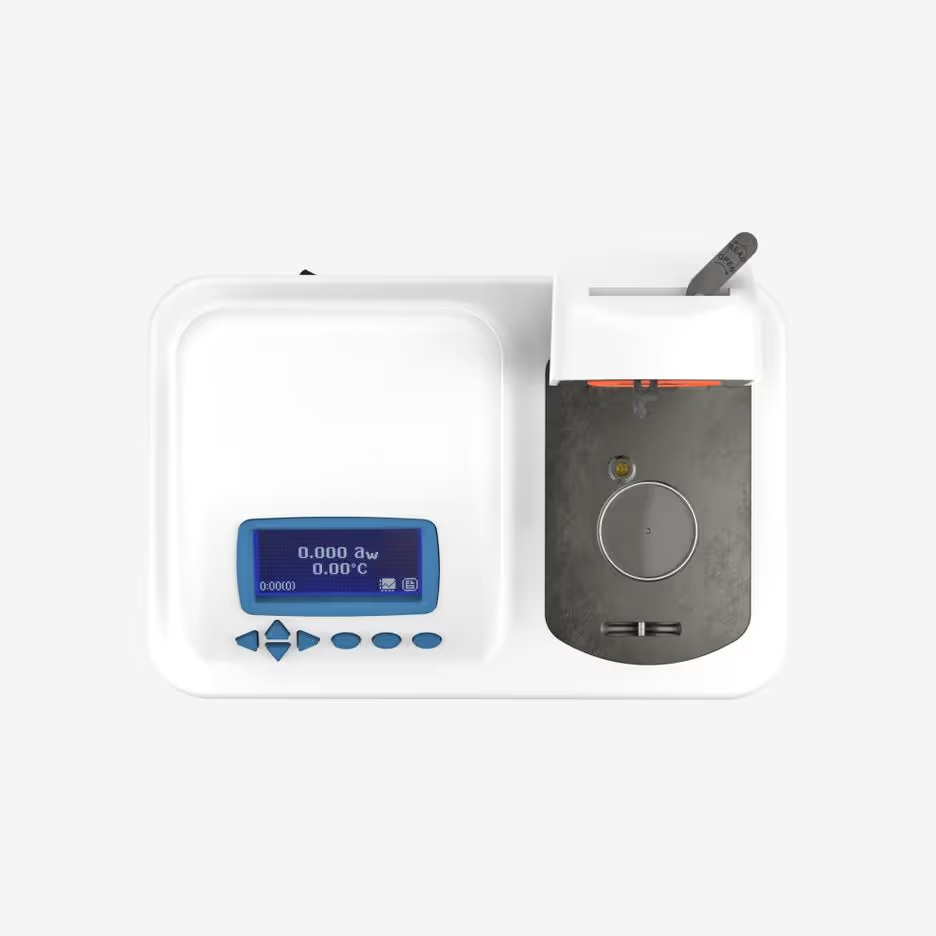
Minimal training is required to generate accurate results, with intuitive operation that helps teams focus on decision-making instead of instrument complexity.
Easy to maintain
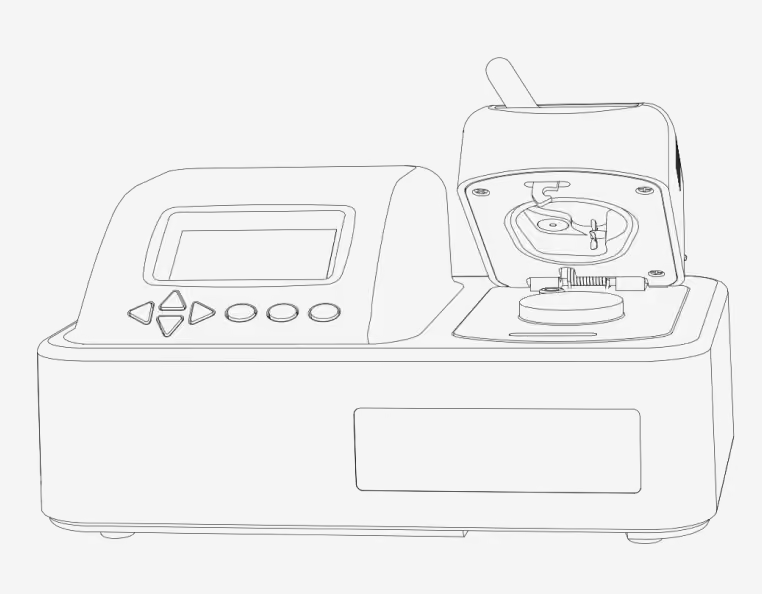
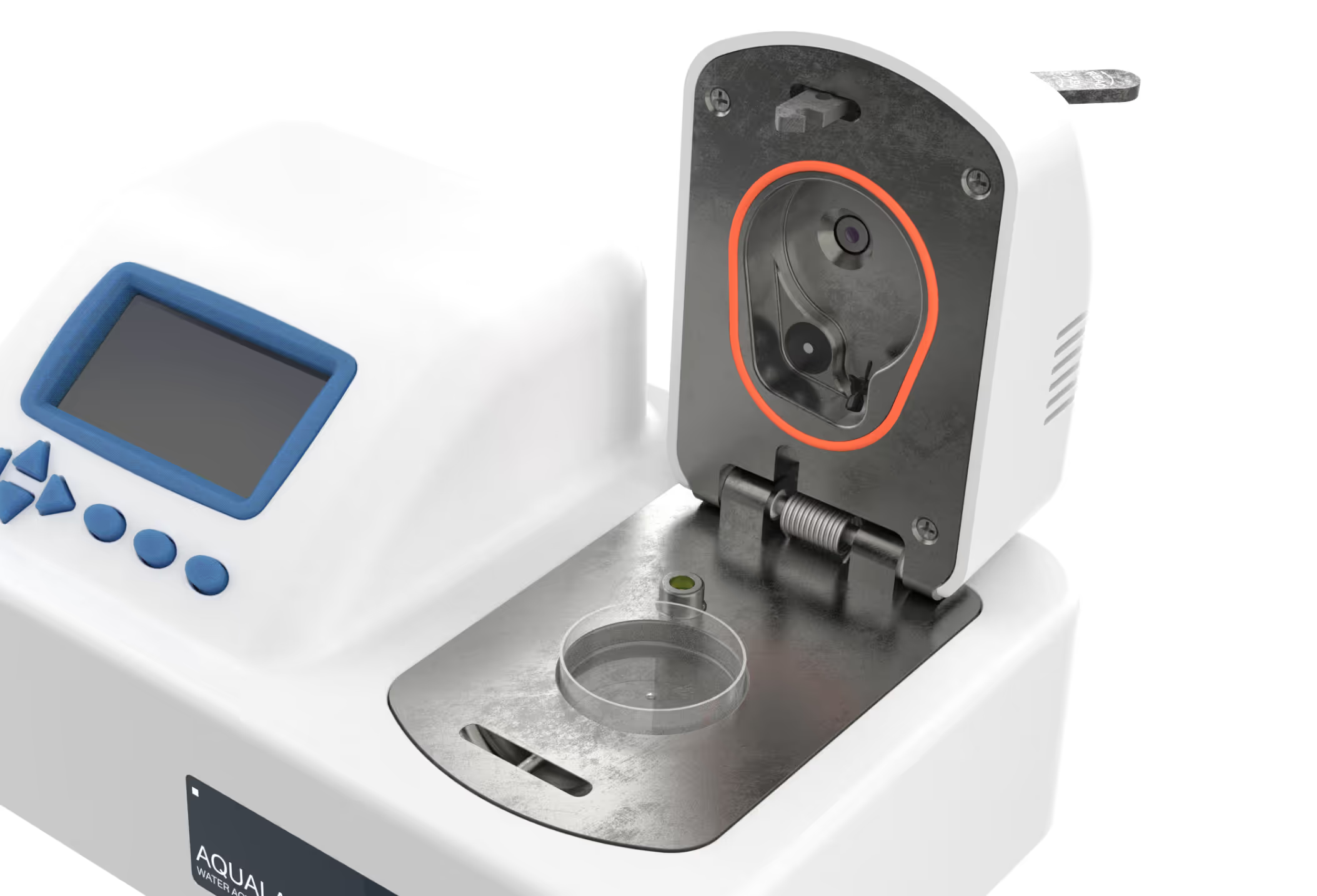
The flip-open chamber design allows quick inspection and cleaning, helping users spot contamination early, maintain performance, and reduce downtime with straightforward routine care.
Shop accessories
Water activity standards
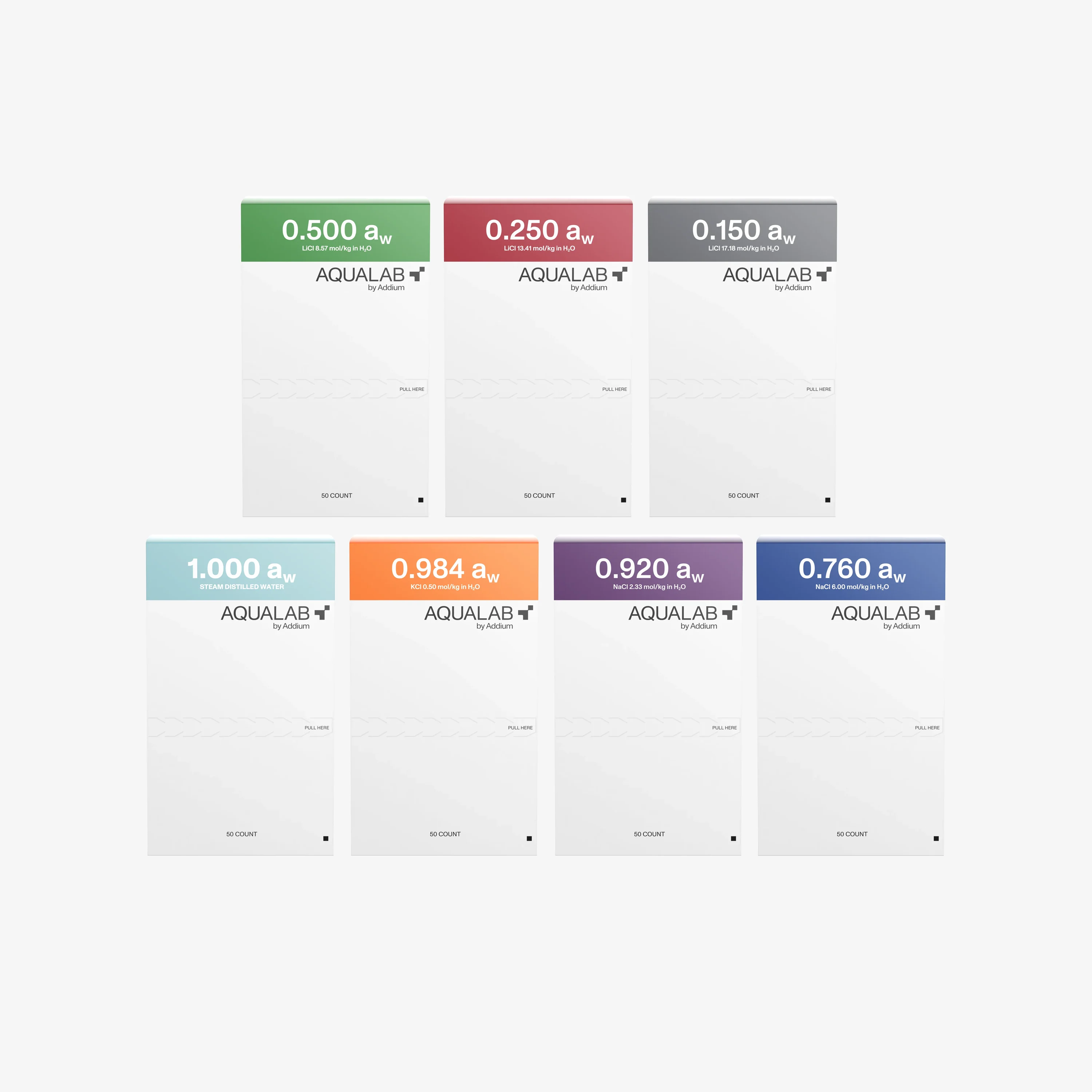
Certified salt standards for verifying water activity accuracy and repeatability across instruments, users, and locations. Each box contains 50 tubes.
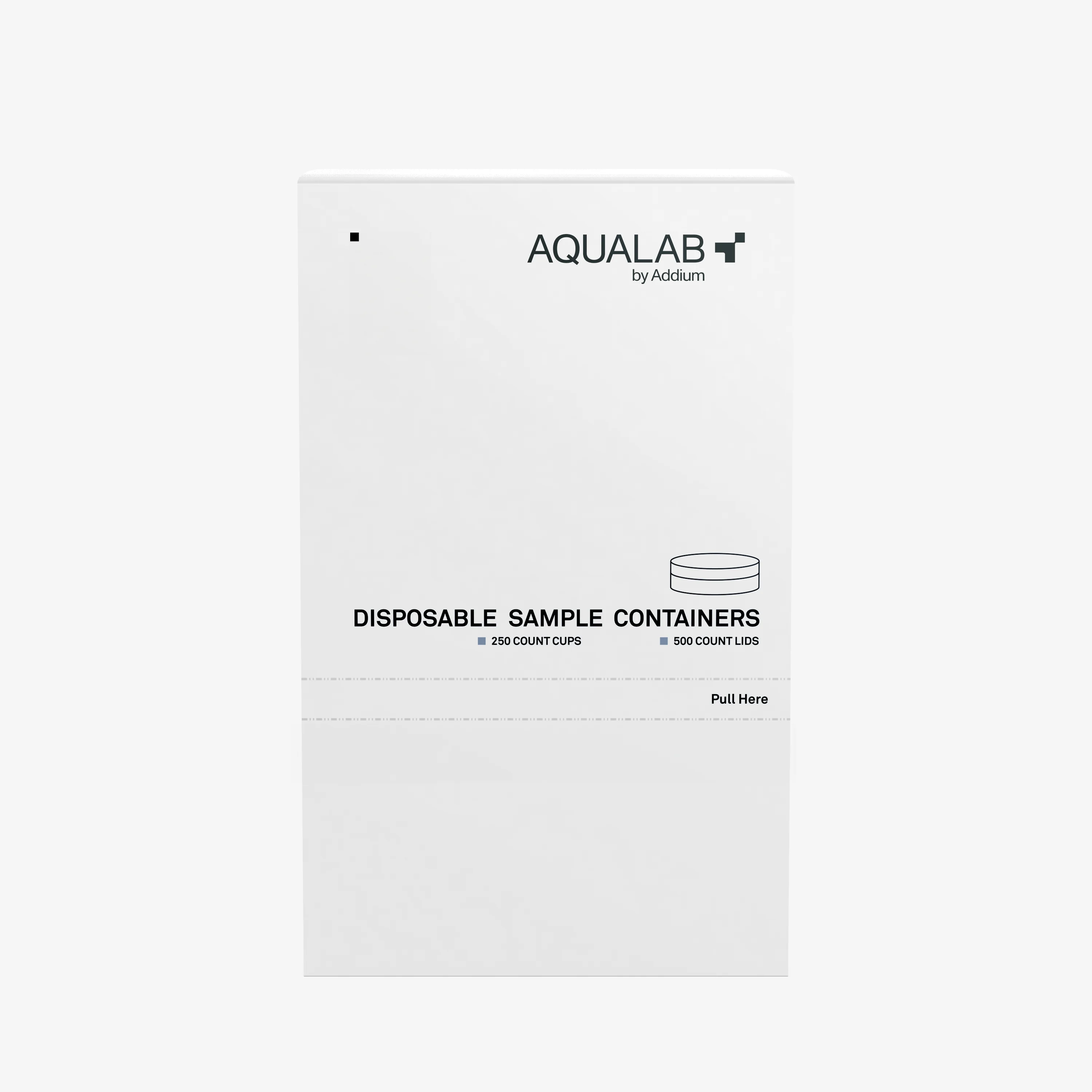
Disposable sample cups
Single-use sample cups designed to prevent cross-contamination and ensure consistent, accurate water activity and moisture measurements.
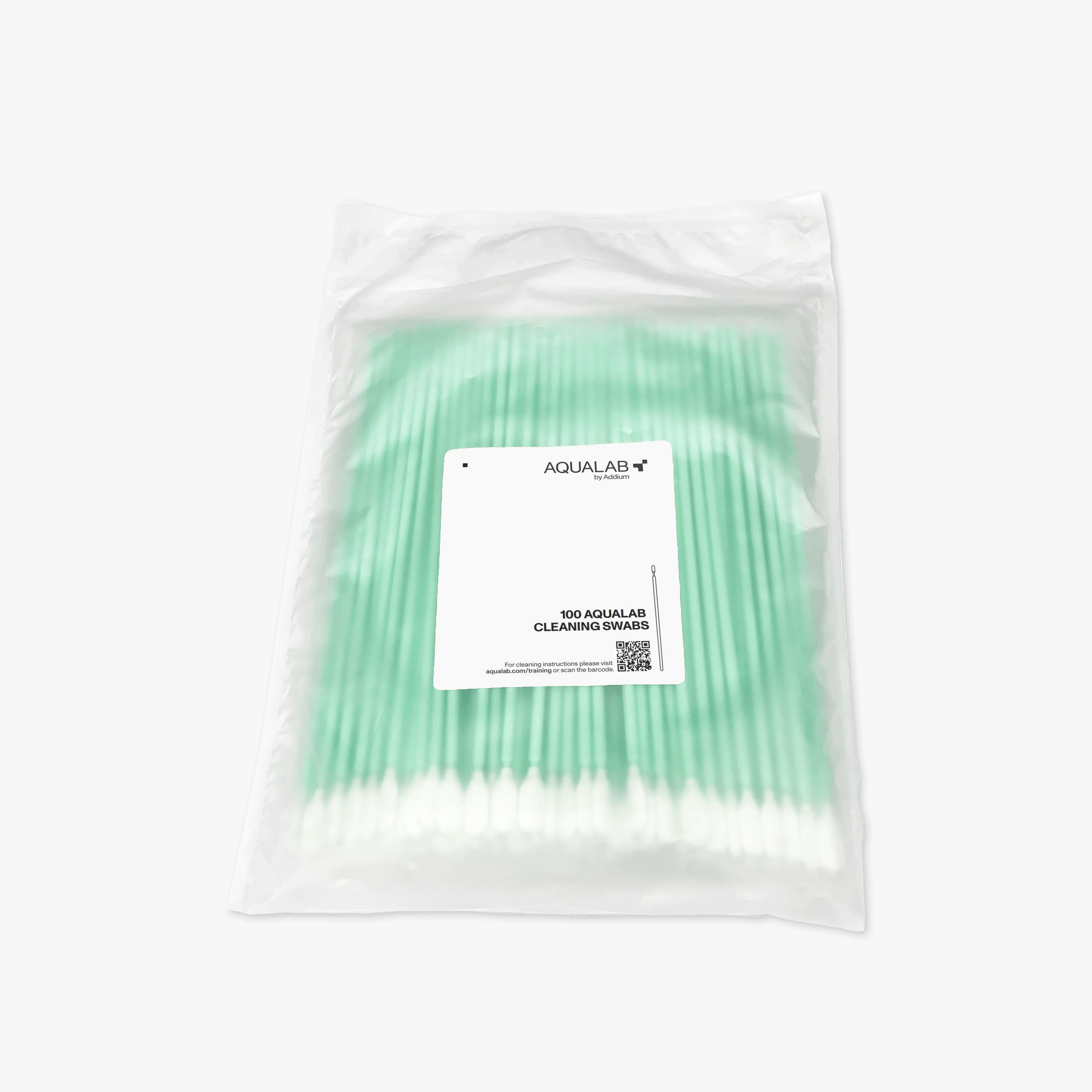
Single-use cleaning swabs
Disposable swabs designed for quick chamber cleaning and contamination control between water activity or moisture measurements.
FAQs
Can I reuse the standards or sample cups?
The standards we use are unsaturated salt solutions, which are created with high accuracy and precision. They are not reusable, however, as exposure to ambient conditions will begin to alter the standards. If they are kept in a sample cup with a lid, they can be kept for up to two hours but no longer. The sample cups are meant to be disposable. Residue left behind from the previous sample can impact your readings and introduce error. Repeat washing of the cups breaks down the coating and material can become embedded in the plastic, which can also introduce error. For consistent and accurate results, we do not recommend reusing the cups.
Re-order sample cups and standards →
What standards should I use to verify?
You should always select two standards that bracket your product range. A two-point verification is necessary to evaluate the factory calibration and ensure the slope is correct.To ensure the instrument is reading correctly across your product range, and to satisfy audit requirements, select two standards that bracket or are closest to your working range for routine verification. We offer seven standards that cover a broad range of water activity values.
Why do I get long read times?
Long read times could be caused by a number of factors. The four most common causes are listed below.
- The most common is that the instrument needs to be cleaned. Lack of cleaning or improper cleaning frequently causes long read times.2. Sample type: High fat, viscous and low water emitting samples all take longer to equilibrate in the chamber. This is sample dependent and long read times are necessary to give accurate, fully equilibrated results.
- Volatile ingredients such as alcohols, propylene glycol, and acetic acid can interfere with the chilled mirror sensor and cause unstable readings and extended read times.
- A damaged or bent fan blade in the chamber. If the fan is damaged and not working correctly, the removal of boundary layer moisture on the mirror surface is delayed, extending the read times.
How often should I run the verification standards?
This will depend on the frequency of use and the environment the instrument is operating in. If the instrument is being used daily, we recommend a daily verification prior to running samples. If the instrument is used sporadically, verifications on the day of use are sufficient. In manufacturing environments that are dusty or greasy, involve samples that are messy, or running multiple shifts per day, the verification may need to be done each shift. This is particularly important if water activity is part of a release specification.
How often should my instrument be sent in for service?
We recommend that instruments come in once per year for annual service and calibration. This is required if you must have a certificate on file showing instrument calibration. If the instrument is used heavily and in harsh environments, more frequent service may be needed.
Downloads and documents
Cited publications
Punit Singh & Prabal Talukdar (2020) Determination of Desorption Isotherms of Potato Using Gravimetric Method and Fast Isotherm Method, Heat Transfer Engineering, 41:6-7, 513-521. (Article link).
Akbar, A.; Medina, A.; Magan, N. Resilience of Aspergillus westerdijkiae Strains to Interacting Climate-Related Abiotic Factors: Effects on Growth and Ochratoxin A Production on Coffee-Based Medium and in Stored Coffee. Microorganisms 2020, 8, 1268. (Article link).
Allan, Matthew, Lynne S. Taylor, and Lisa J. Mauer. "Common-ion effects on the deliquescence lowering of crystalline ingredient blends." Food chemistry 195 (2016): 2-10. (Article link).
Voelker, Adrienne L., Abigail A. Sommer, and Lisa J. Mauer. "Moisture sorption behaviors, water activity-temperature relationships, and physical stability traits of spices, herbs, and seasoning blends containing crystalline and amorphous ingredients." Food Research International 136 (2020): 109608.
Allan, Matthew, and Lisa J. Mauer. "RH-temperature phase diagrams of hydrate forming deliquescent crystalline ingredients." Food chemistry 236 (2017): 21-31. (Article link).
Esmaeili, Amir, and Donald W. Kirk. "Water removal in the alkaline electrochemical valorization of glycerol by pervaporation." Separation and Purification Technology 248 (2020): 116943. (Article link)
Shah, Manoj K., et al. "Efficacy of vacuum steam pasteurization for inactivation of Salmonella PT 30, Escherichia coli O157: H7 and Enterococcus faecium on low moisture foods." International journal of food microbiology 244 (2017): 111-118. (Article link)
Zhu, Fan, and Jia Sun. "Physicochemical and sensory properties of steamed bread fortified with purple sweet potato flour." Food Bioscience 30 (2019): 100411. (Article link)
Hiew, Tze Ning, et al. "Effect of moisture sorption on the performance of crospovidone." International journal of pharmaceutics 514.1 (2016): 322-331. (Article link)
Neo, Yun Ping, et al. "Evaluation of gallic acid loaded zein sub-micron electrospun fibre mats as novel active packaging materials." Food chemistry 141.3 (2013): 3192-3200. (Article link)
Technical specifications
Measurement specifications
Water Activity
Range:
0.0300 to 1.0000 aw
Resolution:
0.0001 aw
Accuracy
:±0.0030 aw
Repeatability:
0.0010 aw
Sensor Type:
Chilled mirror dewpoint
Moisture Content
Accuracy:
0.1%–0.5% to moisture content reference*
Repeatability:
0.02%
Temperature
Range:
15.00 – 50.00 °C
Resolution:
0.01 °C
Accuracy:
±0.10 °C
Read Time
Minimum:
60 s
Typical:
~5 min
Physical specifications
Case Dimensions
Length:
26.7 cm (10.5 in)
Width:
17.8 cm (7.0 in)
Height:
12.7 cm (5.0 in)
Case Material
POLYLAC PA-765 (ABS) with fire retardant
Display
64 × 128 graphical
Power
110–220 VAC50/60 Hz
Sample Cup Capacity
14 mL (0.47 fl oz)
Operating Temperature
Minimum:
4.0 °C
Maximum:
50.0°C
Operating Environment
0%–90% noncondensing
Weight
3.1 kg (6.8 lb)
Data Communications
USB A and RS-232 serial
9,600–115,000 baud