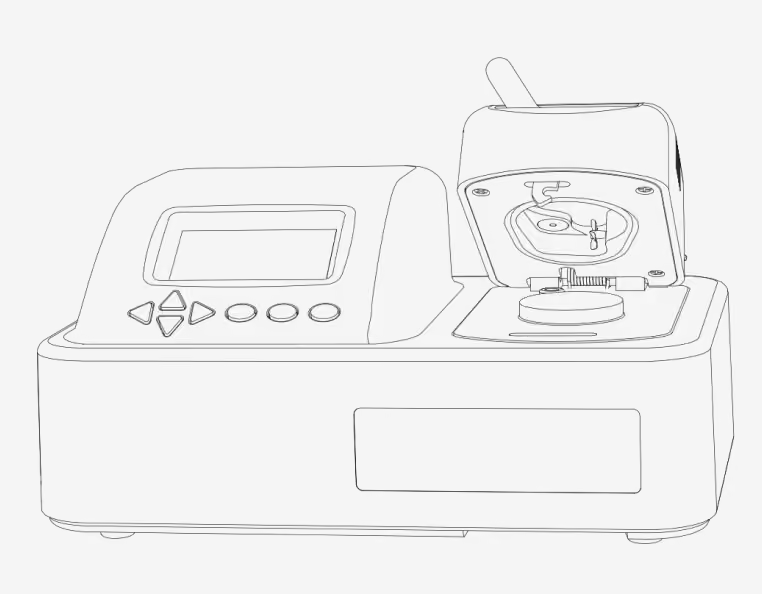
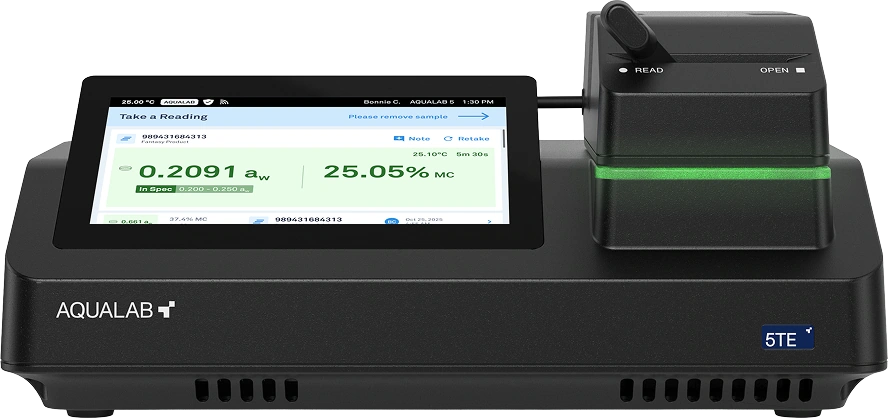
Water activity meter
AQUALAB TDL 2
Precise water activity measurements for volatile and complex samples where traditional sensors fail.

Built for challenging samples and strict standards
AQUALAB TDL 2 uses tunable laser diode technology to directly measure water molecules, allowing QA, R&D, and production teams to accurately test volatile samples like sauces, tobacco, alcohols, and fuels.
0.003aw
Water activity accuracy
≤5min
Typical read time
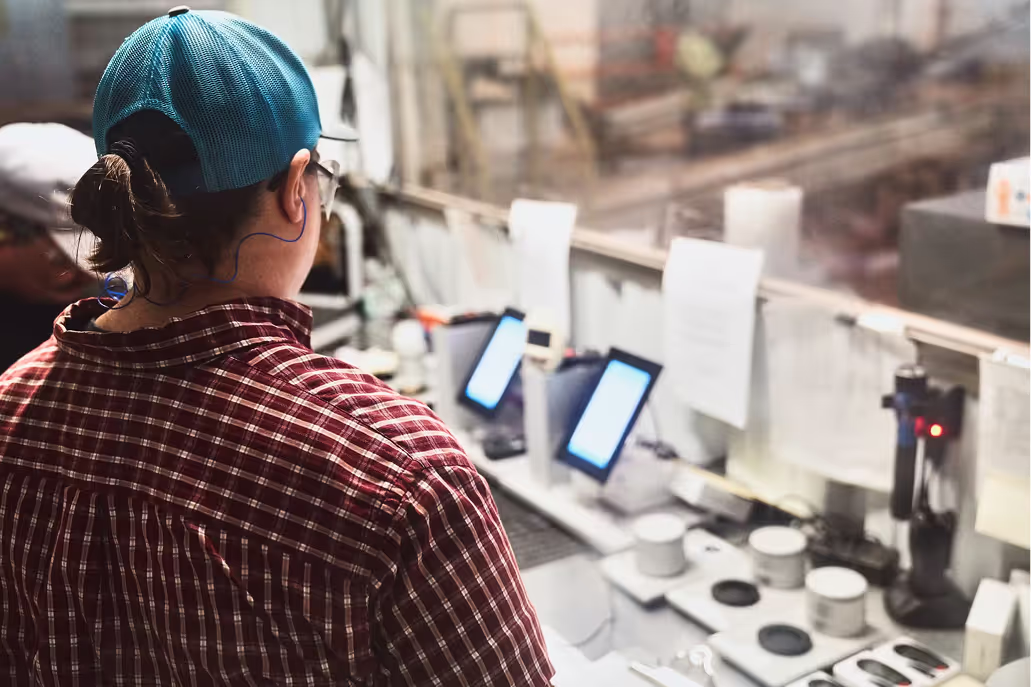


Precision where others fail
AQUALAB TDL 2 delivers reliable water activity measurements in samples with volatile compounds by using laser-based sensing, enabling accurate decisions for product safety, stability, and regulatory compliance.
Laser-based measurement
A tunable laser diode locks onto water molecules directly, measuring water activity regardless of volatile concentration—even in samples like pure alcohol, gasoline, or tobacco.
Volatile-proof accuracy
Unlike capacitive or dew point sensors, the TDL sensor ignores volatile interference, producing stable, repeatable water activity results in samples traditionally considered impossible to measure accurately.
Fast, reliable results
Typical measurements take less than five minutes, dramatically reducing test time compared to instruments that require extended equilibration or indirect correction methods.
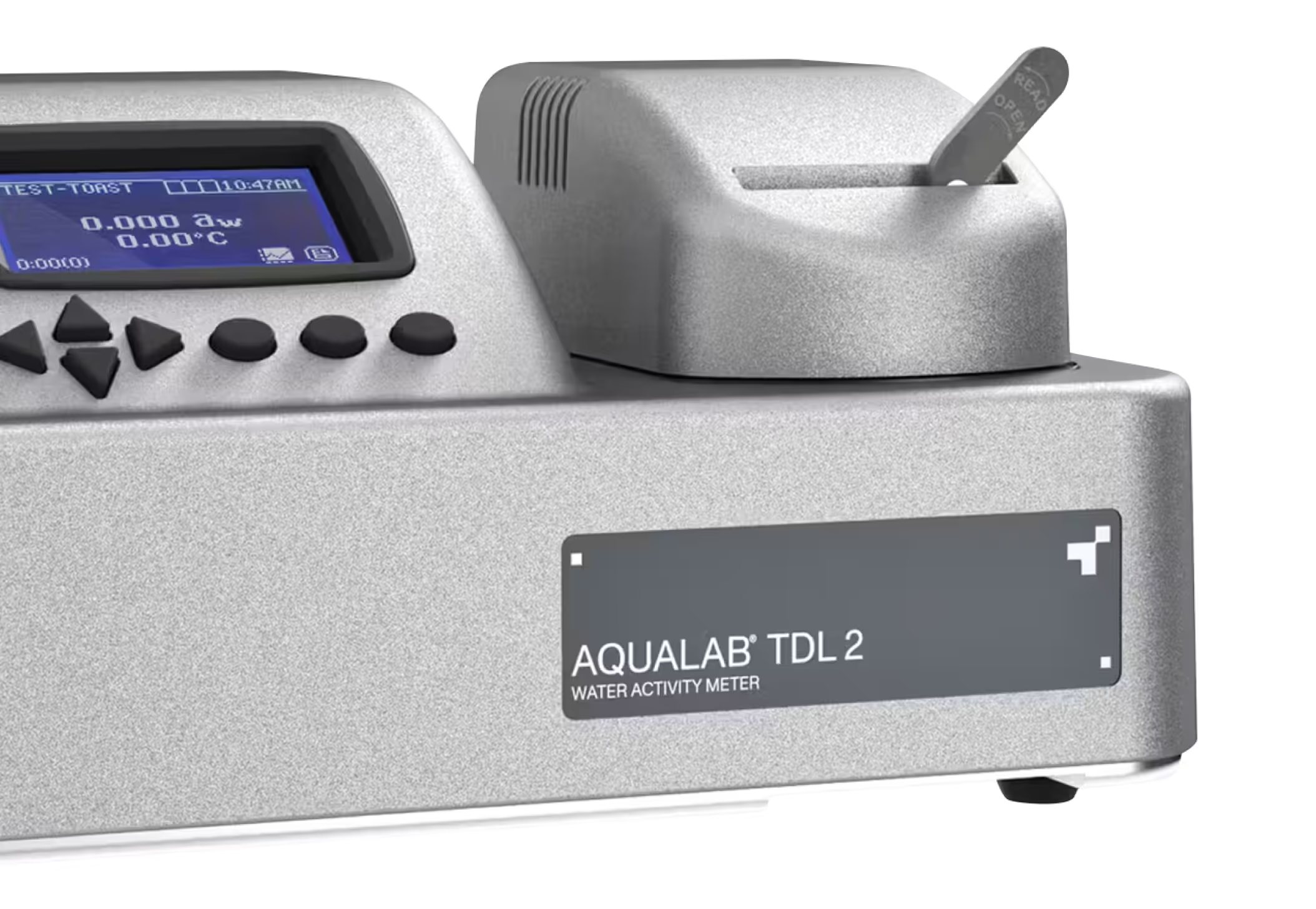
Industry-validated performance
Specified by CORESTA as the only approved sensor for water activity measurement in tobacco, AQUALAB TDL 2 is trusted by researchers and regulated industries worldwide.
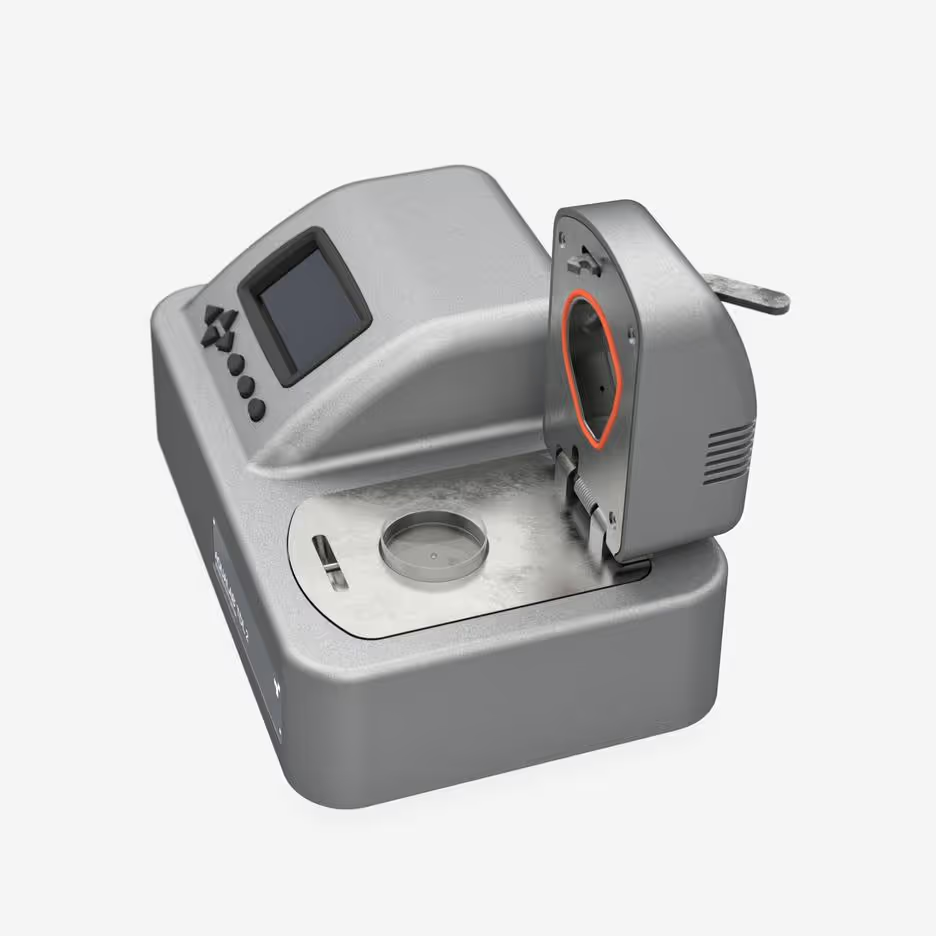
Simple to operate
With no moving parts and no calibration required, AQUALAB TDL 2 delivers lightning-fast measurements with minimal training, making accurate testing accessible to any operator.
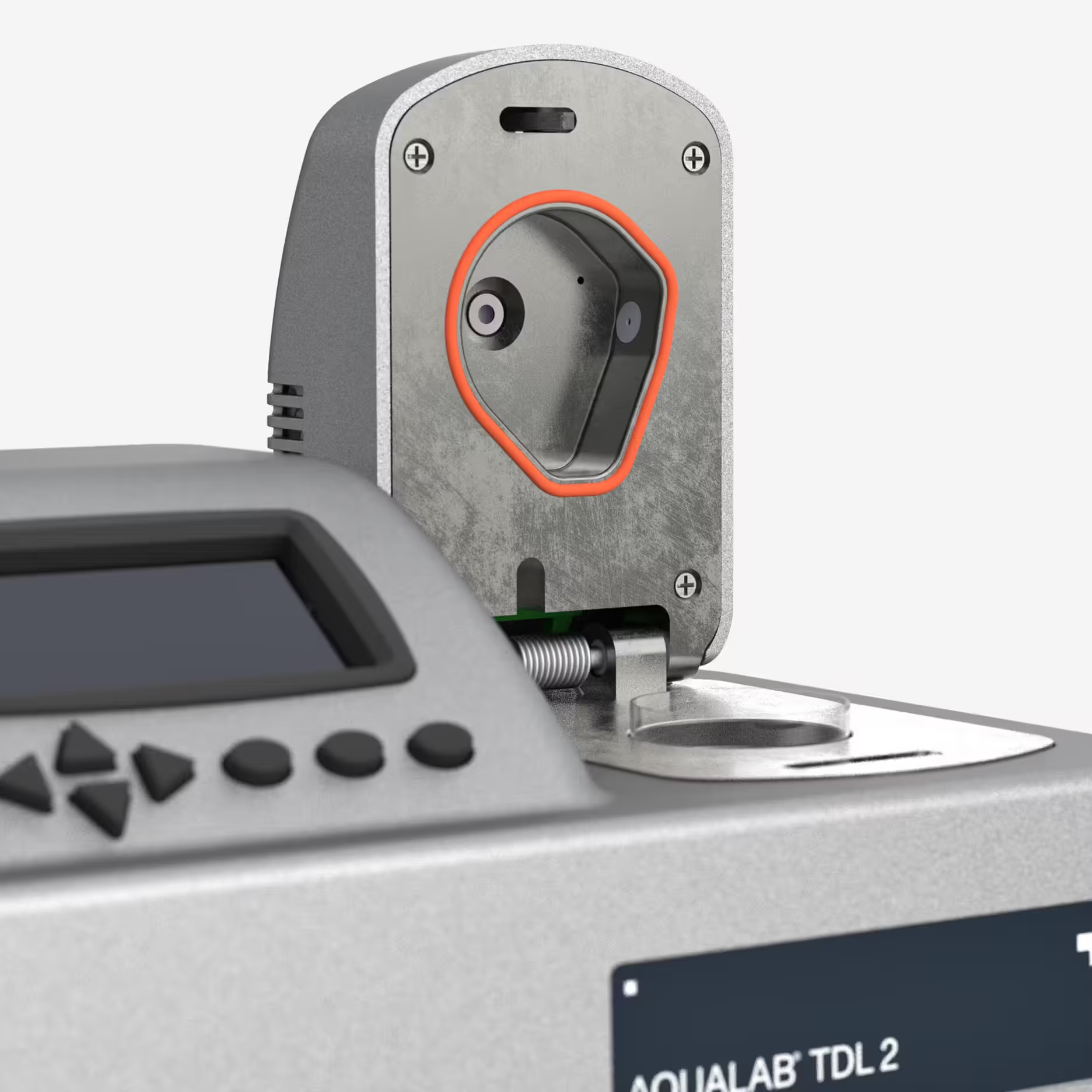
Low maintenance design
A sealed sample chamber and solid-state laser sensor reduce routine maintenance, limit downtime, and ensure long-term performance even in demanding production and laboratory environments.
Shop accessories
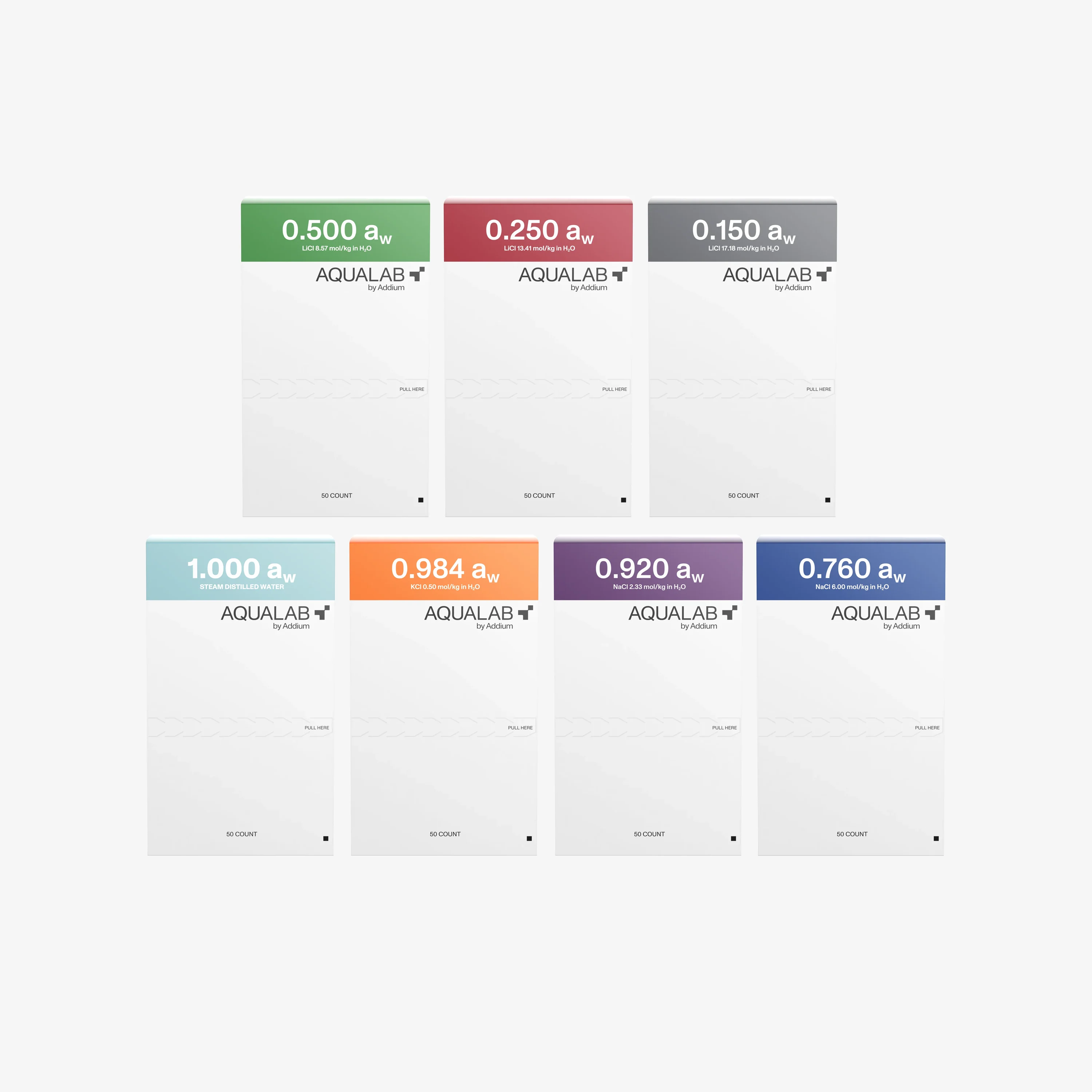
Water activity standards
Certified salt standards for verifying water activity accuracy and repeatability across instruments, users, and locations. Each box contains 50 tubes.
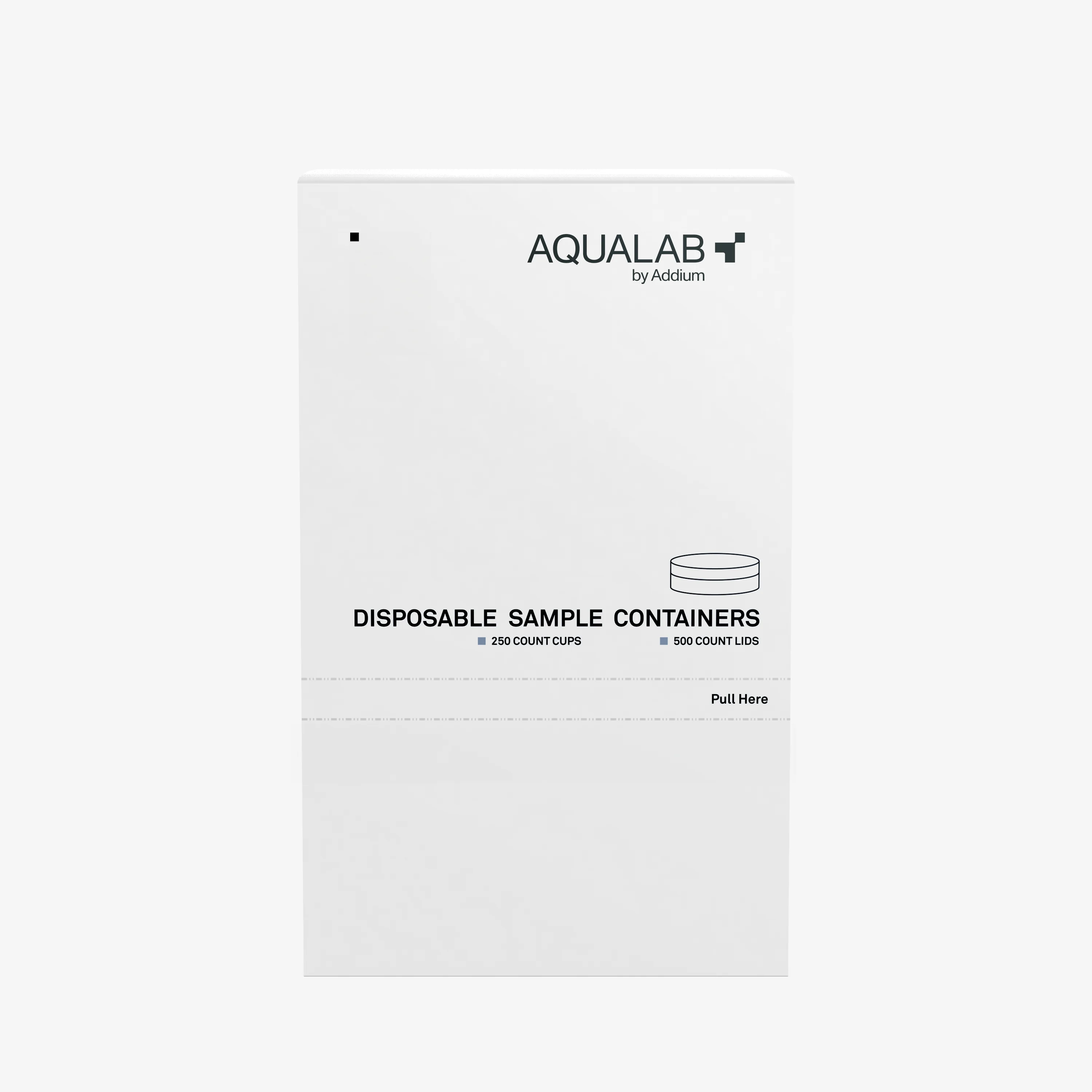
Disposable sample cups
Single-use sample cups designed to prevent cross-contamination and ensure consistent, accurate water activity and moisture measurements.
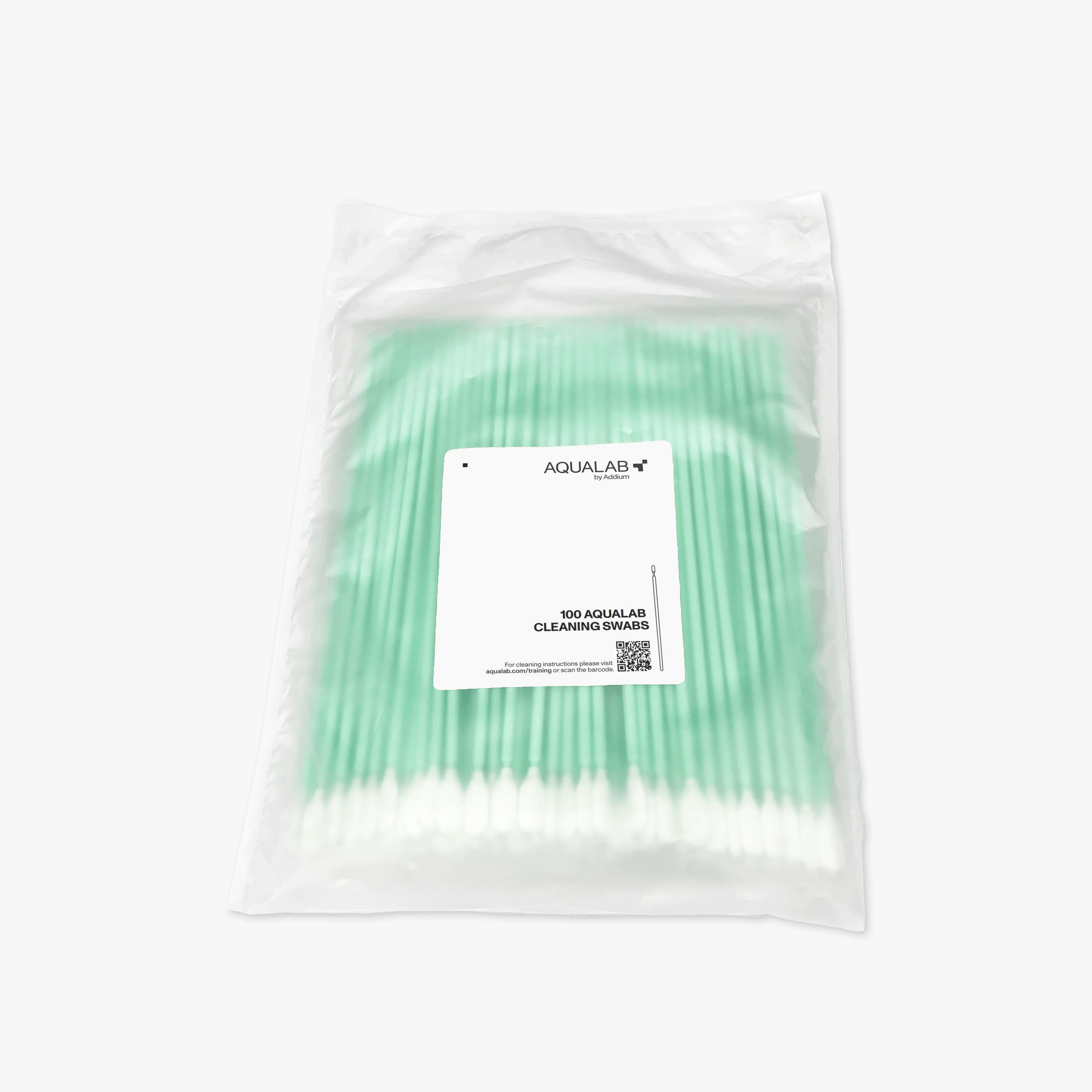
Single-use cleaning swabs
Disposable swabs designed for quick chamber cleaning and contamination control between water activity or moisture measurements.
FAQs
Are tunable diode laser (TDL) sensors affected by pressure fluctuations?
The TDL measures water vapor concentration by scanning a single spectral water vapor absorption line at 1854 nm. The absorption line is not really a “line”, it has width and a “bell” shape described by a Lorenzian function (similar to a Gaussian, but broader). As with all spectral lines, increases in ambient pressure decrease peak height and increase peak width. This is known as pressure broadening. The peak area, however, is fairly insensitive to pressure variations.
AQUALAB TDL measures peak area, and is therefore insensitive to pressure variation. There remains, however, enough sensitivity to require compensation. A built in barometer sensor measures atmospheric pressure and compensates for day to day atmospheric pressure fluctuations. Larger changes, which would occur if the instrument were installed at a new location with substantially different elevation from where it was calibrated, may require an adjustment in the calibration. This is easily done using AQUALAB calibration standards.
How can I minimize moisture migration in hygroscopic products during sampling?
The best approach is to put the water activity instrument and the sample into controlled humidity conditions. Use a glove box, or get the sample inside the chamber as quickly as possible to prevent water uptake from the environment. With an instrument that maintains the seal in the chamber, it’s possible to perform consecutive readings. But if the instrument requires pulling out the sample to take a new reading, the water activity will continually change as the sample takes up more and more moisture.
Is the whole tablet measurement of value?
It depends if the tablet is non-coated or coated. If the coating material can absorb water, there is a critical water activity where the coating material will begin to break down. Thus, if monitoring that aspect of the product, then reading the water activity of a whole tablet would be important.
Would you recommend breaking up a tablet with a mortar and pestle?
A mortar and pestle is a valuable tool for sample preparation because it breaks things apart without being too excessive. You can achieve the same effect with a coffee grinder or food processor, but use only a couple of quick pulses. Process just enough to break the sample apart without grinding it.
When testing finished pharmaceutical products such as tablets, should you test the entire tablet? Or should the tablets be crushed or ground?
If the tablet has no coating, there won’t be a significant difference in water activity whether crushing it or reading it whole. If the tablet is coated, crush it to expose the interior. Don’t grind it. Otherwise, the water activity meter is only testing how effective the coating material is.
How do you read water activity in large, dense products, such as brazil nuts?
Break large products into pieces. This will keep read times shorter. This will also make sure you are measuring the water activity of the center of the product, not just the exterior.
Does freezing a product increase its water activity?
It depends on the freezing process. If the product is not frozen correctly and cells begin to rupture, the water activity may change. Remember to thaw a frozen sample before testing, as water activity can’t be read in a frozen state.
Does temperature change the water activity of a material?
There’s no good way to predict which types of products are sensitive to temperature, but reading a product at a series of different temperatures will show which products are sensitive. Meat products tend to be fairly stable, however some powdered compounds and sugars are more affected by temperature changes.
What would be the best way to prepare an oily meat product for testing?
An oily product requires longer read times. Breaking a product into smaller pieces will help, but don’t grind it. Grinding will tear apart the tissue structure and affect water activity. Slice it or pull off pieces to put into a sample cup.
How long can samples be stored in Whirl-pak bags before water activity is affected?
Samples can typically be stored whole in a Whirl-pak bag for half a day without a significant impact on water activity. If you grind the sample, however, you can cause substantial changes in water activity within five to ten minutes. For longer term storage, to store ground samples, or to send a sample to another lab, use a parafilmed sample cup with a screw top cap or a foil pouch.
My product is coated with fat, Will that affect the water activity reading?
All coatings impact water activity readings because they act as barriers to water molecules moving out of a product matrix and into the vapor phase. If your product has any kind of a coating around it, you need to break the sample apart before measuring.
Are there any sample limitations for the TDL?
All coatings impact water activity readings because they act as barriers to water molecules moving out of a product matrix and into the vapor phase. If your product has any kind of a coating around it, you need to break the sample apart before measuring.
Are here any sample limitations for the TDL?
The TDL was designed specifically for use with volatile materials. We have tested alcohol, propylene glycol, acetone, gasoline, and other organic solvents without interference. The only samples you should be cautious with are those considered to be highly corrosive as they may damage the block coating or laser housing.Cleaning immediately after running corrosive samples is highly recommended to prevent corrosion of your instrument. You can run samples in liquid or solid form as long as the samples fit into our sample cup.
Do I need a new multipoint calibration for each temperature?
Yes. The calibration using the laser is temperature dependent. The instrument comes factory calibrated for 25°C. If you wish to run at other temperatures, a multipoint calibration must be done at that temperature before you can proceed.
Why won't my instrument verify within your specifications?
If the TDL is not verifying, the first thing that should be done is to clean the chamber. If cleaning does not resolve the issue, try performing a multipoint calibration. If the multipoint calibration is not holding from day to day, please contact your METER Food Support team for further assistance.
What is the accuracy of readings in the low emitter sensor setting?
An instrument with a low emitting mode allows the user to manually make trade-offs between speed and accuracy. To investigate the low emitting mode, take a reading of the product in the standard read mode, and record the water activity value and read time. Then, in the low emitting mode, take a reading of the sample at the best accuracy setting and record the read time. Continue adjusting the accuracy level and recording readings and times. The goal is to remain close to the original water activity value, while saving read time. This will determine what accuracy setting is best for a particular product.
What percent propylene glycol or ethanol is allowable in a formulation before it causes problems in dew point (chilled mirror) instruments?
Volatile components in different sample matrices are dependent upon the sample. If using propylene glycol in one product, there may be a noticeable impact on chilled mirror readings at 0.5%. In a completely different product, it might be 2-3%. Generally, propylene glycol will be the most problematic component. For concerns about whether or not a concentration in a product is enough to be a problem, feel free to contact our support department. They will perform tests that show whether the volatiles in a product are impacting the chilled mirror method. If so, using the TDL sensor (which is unaffected by volatiles) should solve the problem.
Downloads and documents
Cited publications
Voelker, Adrienne L., Abigail A. Sommer, and Lisa J. Mauer. "Moisture sorption behaviors, water activity-temperature relationships, and physical stability traits of spices, herbs, and seasoning blends containing crystalline and amorphous ingredients." Food Research International 136 (2020): 109608. (Article link).
Allan, Matthew C., et al. "Determination of the Water Activities of Wines and Spirits." Food Analytical Methods 12.12 (2019): 2753-2763. (Article link).
Jin, Guangyuan, et al. "Water dynamics during solid-state fermentation by Aspergillus oryzae YH6." Bioresource technology 277 (2019): 68-76. (Article link).
Malapert, Aurélia, et al. "Characterization of hydroxytyrosol-β-cyclodextrin complexes in solution and in the solid state, a potential bioactive ingredient." LWT 102 (2019): 317-323. (Article link).
Quinn, Adam R., et al. "Isothermal inactivation of Salmonella, Listeria monocytogenes, and Enterococcus faecium NRRL B-2354 in peanut butter, powder infant formula, and wheat flour." Food Control 121 (2021): 107582. (Article link).
Van Long, Nicolas Nguyen, et al. "Temperature, water activity and pH during conidia production affect the physiological state and germination time of Penicillium species." International journal of food microbiology 241 (2017): 151-160. (Article link).
Allan, Matthew, and Lisa J. Mauer. "Dataset of water activity measurements of alcohol: water solutions using a Tunable Diode Laser." Data in brief 12 (2017): 364-369. (Article link).
Visconti, Vincent, et al. "Impact of intraspecific variability and physiological state on Penicillium commune inactivation by 70% ethanol." International Journal of Food Microbiology 332 (2020): 108782. (Article link).
Fontana Jr, Anthony J., and Brady P. Carter. "Measurement of Water Activity, Moisture Sorption Isotherm, and Moisture Content of Foods." Water activity in foods: Fundamentals and applications (2020): 207-226. (Article link).
Darvishmanesh, Siavash, Brian A. Pethica, and Sankaran Sundaresan. "Forward osmosis using draw solutions manifesting liquid-liquid phase separation." Desalination 421 (2017): 23-31. (Article link).
Technical specifications
Measurement specifications
Water Activity
Range:
0.0000 to 1.0000 aw
Resolution:
0.0001 aw
Accuracy:
±0.0050 aw at 25 °C
Repeatability:
0.0010 aw
Sensor Type:
Tunable diode laser
Moisture Content
Accuracy:
0.1%–0.5% to moisture content reference*
Repeatability:
0.02%
Temperature
Range:
15–50 °C
Resolution:
0.01 °C
Accuracy:
±0.10 °C
Adjustment Increment:
1 °C
Read Time
~5 min
Physical specifications
Case Dimensions
Length:
26.7 cm (10.5 in)
Width:
17.8 cm (7.0 in)
Height:
12.7 cm (5.0 in)
Case Material
POLYLAC PA-765 (ABS) with fire retardant
Display
64 × 128 graphical
Power
85-264 VAC
47-63 Hz
Sample Cup Capacity
14 mL (0.47 fl oz)
Operating Temperature
Minimum:
4.0 °C
Maximum:
50.0°C
Operating Environment
0%–90% RH non condensing
Weight
3.1 kg (6.8 lb)
Data Communications
USB A and RS-232 serial 9,600–115,000 baud