Skala Solo moisture/dryer control system
The Skala Solo Moisture/Dryer Control System is a model-based control system that senses moisture inside the dryer and provides early and precise control response. Learn how the Skala Solo soft sensor reduces dead time, how it applies to flow-through, suspension and batch dryers, and how lower moisture variance lets average moisture rise safely.

Inside the dryer moisture sensing
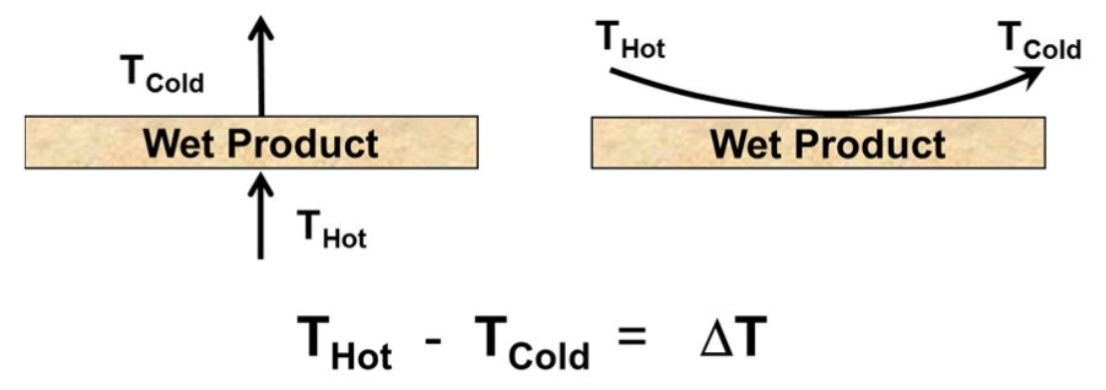
The Skala Solo Moisture Control system consists of a model-based control algorithm that allows moisture sensing of the product inside the dryer. The Skala Solo uses two temperature sensors inside the dryer to sense the moisture content of the product and make control changes to correct the moisture while it is still in the dryer.
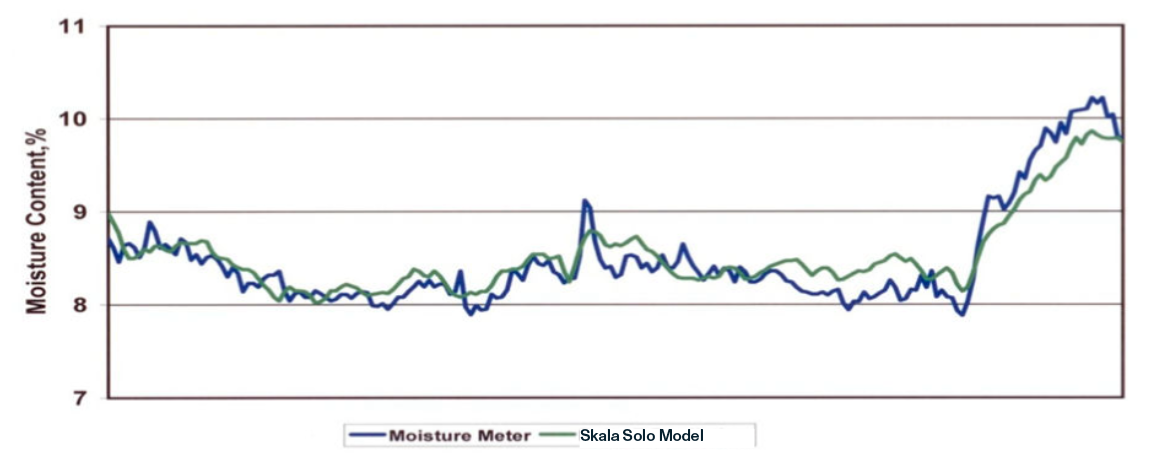
The Skala Solo model can be considered a soft sensor for measuring moisture of the product inside the dryer. Figure 2 shows the product moisture calculated by a Skala Solo soft sensor versus a NIR moisture meter.
Reduces dead time
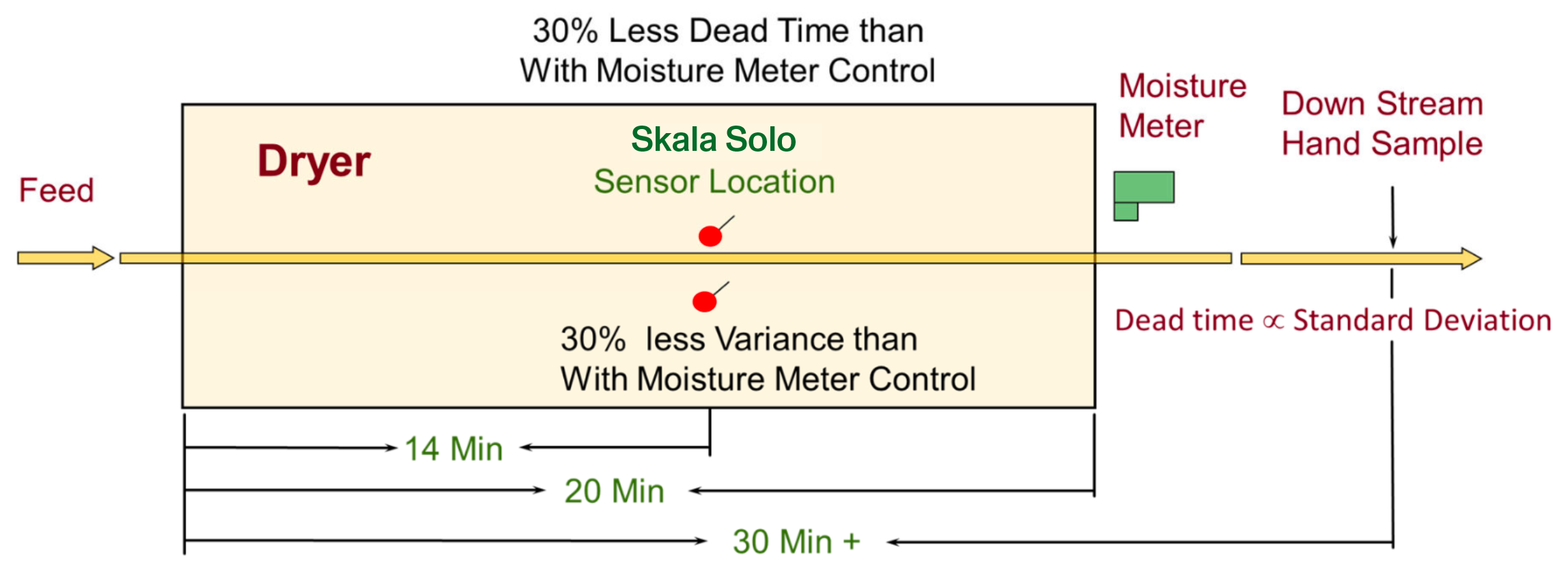
The proper location of the temperature probes in the dryer allows the Skala Solo to become an ‘inside the dryer’ moisture sensor. By sensing the changes in moisture at a point inside the dryer and making control responses, the dead time is greatly reduced. As seen in Figure 3, the Skala Solo will detect the change in moisture and respond to the change in less time than systems using conventional methods, such as moisture meter/sensor or hand sampling.
The moisture variance caused by process upsets is proportional to the dead time between the time of the upset and the time of detection and response. Therefore, by reducing the dead time with early detection and response the moisture variance is also reduced. Normally, the reduction of variance realized with the Skala Solo system is 30% or more. Figure 3 illustrates the location and dead time reduction of the Skala Solo method.
Skala Solo applicable to many dryer types
The Skala Solo control system can be used with many dryer types.
Flow through dryers
Conveyor and many fluid bed dryers are examples of continuous flow-through dryers where the Skala Solo soft sensor is located in the dryer. The moisture and dryer load are monitored for changes and the control response is made while the product is still in the dryer. This early response reduces the dead time, thus reduces moisture variance.
Suspension dryers
The Skala Solo system uses the inlet and exhaust air temperatures to sense the changes in moisture and dryer load. The traditional method for controlling spray, flash, and rotary dryers is to control to an exhaust temperature set point. This method results in immediate control in the right direction, however the exhaust temperature set point must be changed to maintain the target moisture after a load change. This traditional method is not theoretically sound. The Skala Solo method being model based calculates its new set points and maintains the target moisture.
Batch drying
The Skala Solo method has been used on batch dryers with good results. The same Skala Solo principle is used to determine the final Skala Solo value that relates to the desired final moisture content.
Benefits
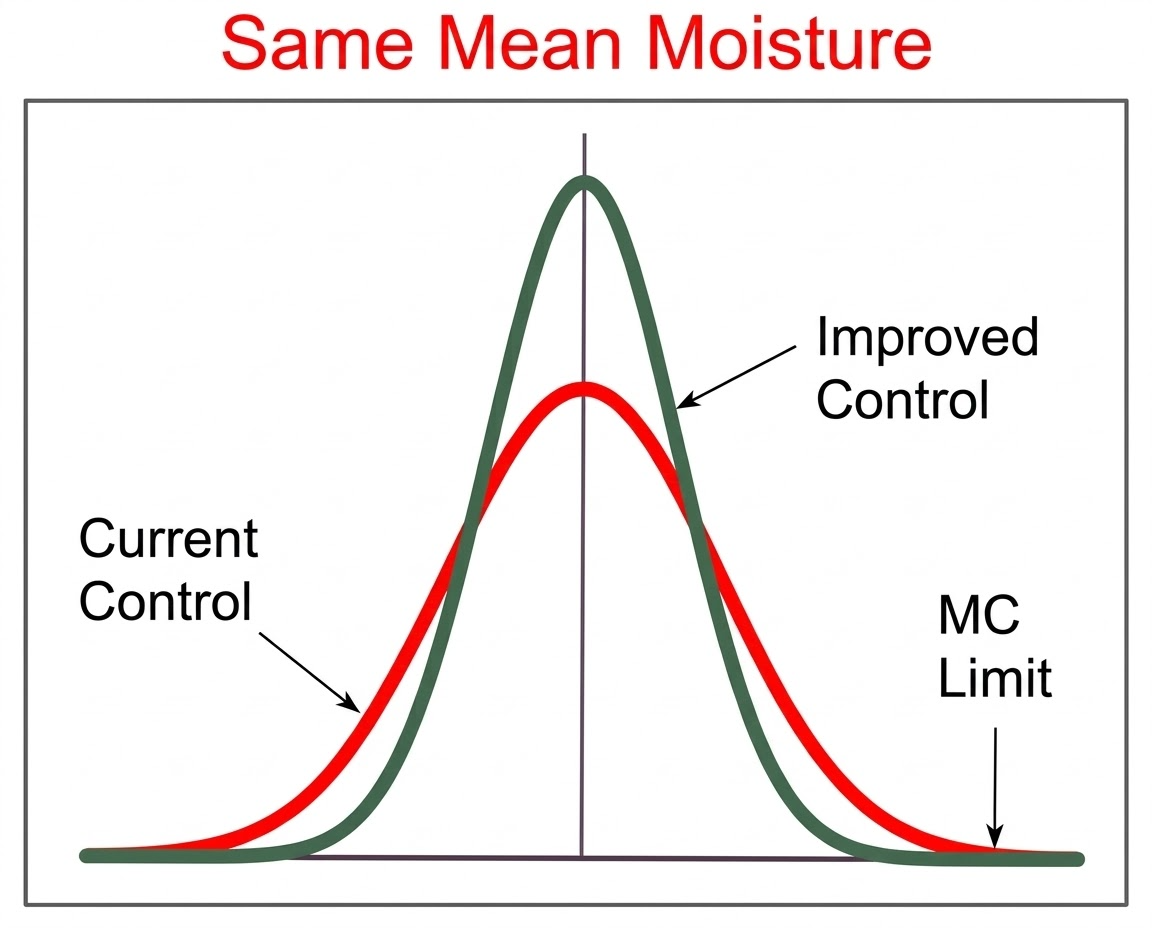
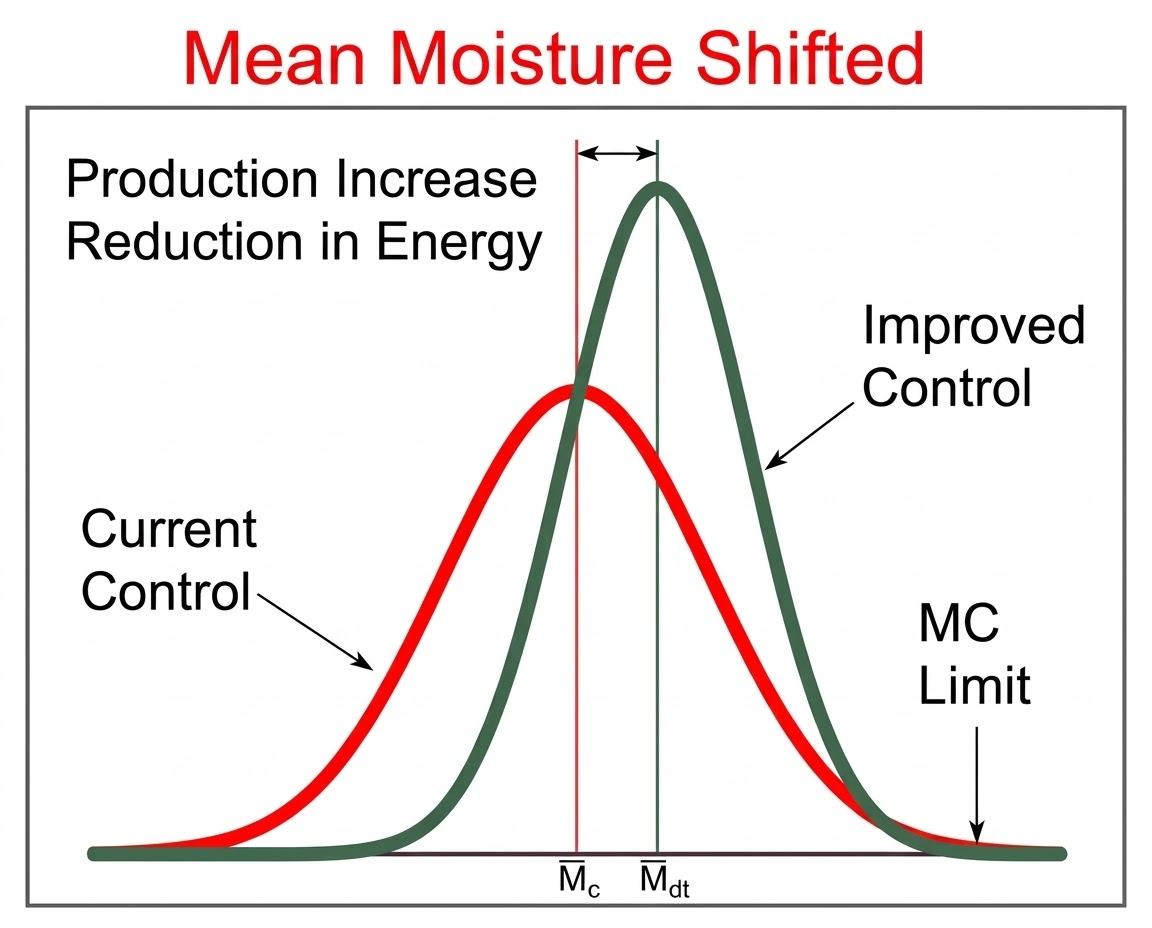
Most often the average moisture content of dried product is low due to lack of good control and the product is over-dried to be safe. The Skala Solo system will reduce the moisture variation, thus allowing the moisture content to be increased and safely stay below the upper control limits. This increase in mean moisture will give a better quality product, a production increase, and an energy savings. Figure 4 shows the reduction in overall moisture variance and Figure 5 illustrates safely increasing average moisture content, thus providing a production increase.
Frequently asked questions
How does Skala Solo reduce dead time?
The proper location of the temperature probes in the dryer allows Skala Solo to become an “inside the dryer” moisture sensor. By sensing changes in moisture at a point inside the dryer and making control responses, the dead time is greatly reduced. Skala Solo detects the change in moisture and responds in less time than systems using conventional methods, such as a moisture meter/sensor or hand sampling.
How much does Skala Solo reduce moisture variance?
Normally, the reduction of variance realized with the Skala Solo system is 30% or more. The moisture variance caused by process upsets is proportional to the dead time between the upset and the time of detection and response, so reducing the dead time with early detection and response also reduces the moisture variance.
Which dryer types can Skala Solo be used with?
The Skala Solo control system can be used with many dryer types. These include flow-through dryers such as conveyor and many fluid bed dryers, suspension dryers such as spray, flash, and rotary dryers, and batch dryers, where the same Skala Solo principle is used to determine the final Skala Solo value that relates to the desired final moisture content.
Why is controlling suspension dryers to an exhaust temperature set point a problem?
The traditional method for controlling spray, flash, and rotary dryers is to control to an exhaust temperature set point. This results in immediate control in the right direction, but the exhaust temperature set point must be changed to maintain the target moisture after a load change, and the method is not theoretically sound. Being model based, Skala Solo calculates its new set points and maintains the target moisture.