SKALA Dry Moisture Control System: Optimize Cheese Moisture With Improved Cook Control
The SKALA Dry Cheese Moisture Control System provides time and temperature cook profiles that are consistent from cook to cook and vat to vat.
Development of cook control
The SKALA Dry cheese vat cook control was developed to control the vat temperature during the cooking step to match a desired temperature cook profile. Generally the temperature during the cooking step is increased from the beginning temperature to a final temperature in a specific length of time. A steady increase in temperature is needed to achieve good curd contraction, expulsion of whey, and maintain a desired final moisture content. Poor temperature control during the cooking step will have adverse effects on yield, curd quality, and final moisture.
Typical PID loops do not work well controlling temperature with continuously increasing set point. PID loops work well for maintaining a temperature set point in a steady-state process. Trying to control to a constantly increasing set point stretches the ability of a PID control loop and the result could be a constant offset from set point or cycling may occur. There is also a long lag time in temperature response, which can cause PID tuning difficulty. Figure 1 shows a steam control response of a typical cooking step and an actual SKALA Dry steam control response. The goal is to maintain a rate of steam flow that results in a smooth and predictable temperature increase.
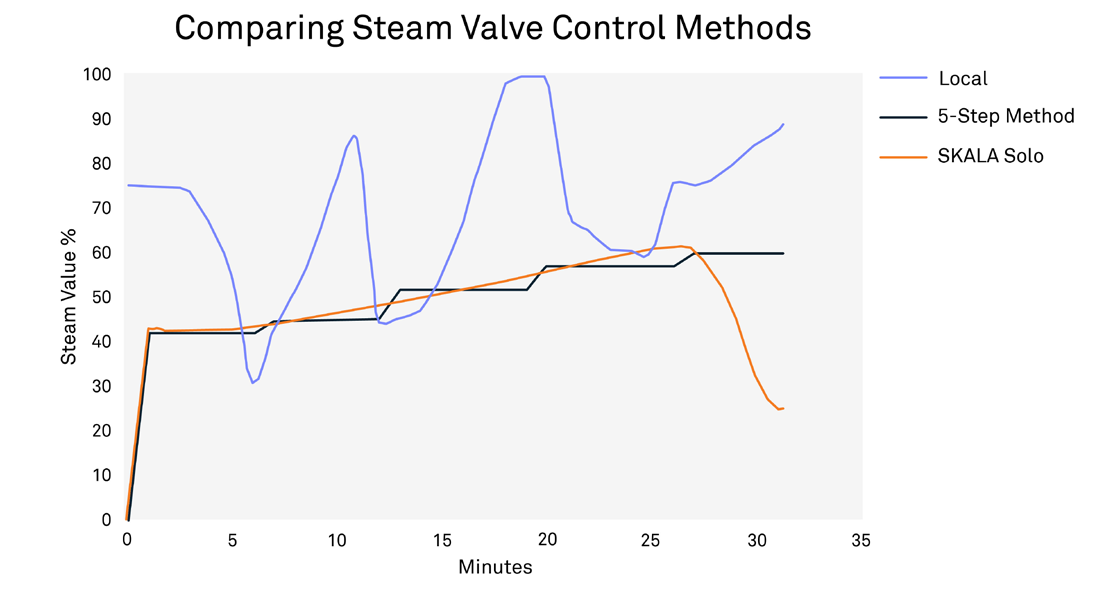
Figure 1. Compare steam valve controls
Overcomes the lag time problem
The SKALA Dry system uses a control model based on the desired temperature profile and temperature response to heat input. This control method avoids the situation of the temperature rising too quickly as it is controlling the temperature increase by a time and temperature model. The system uses the current or starting temperature, the final temperature, the cook minutes, and a desired temperature profile to calculate the temperature control model. The cheese type and agitation would dictate which profile to use. Figure 2 is a chart showing examples of calculated temperature profiles.
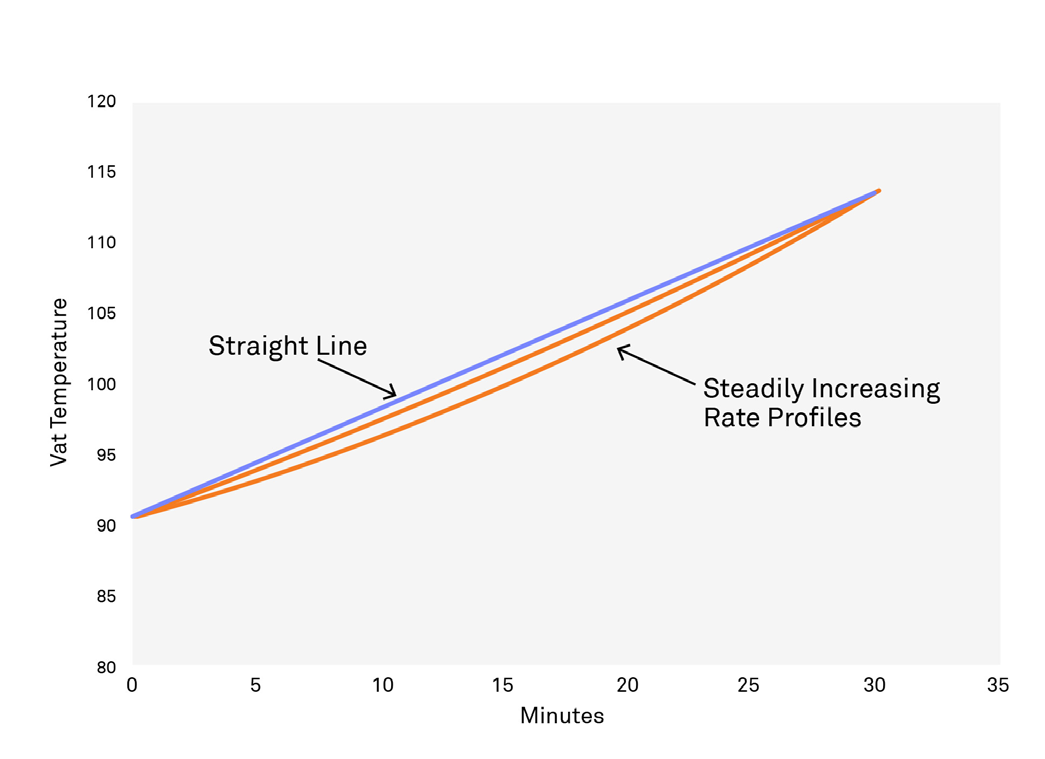
Figure 2. Example temperature profiles
Figure 3 compares the actual vat temperatures during the cooking steps of six cooks, three using local control and three with SKALA Dry control. As seen in the chart, the temperatures of the SKALA Dry controlled cooks follow a consistent time/temperature profile to the final temperature and in the right amount of time. The local control has erratic temperature increases and the total cooking times are varied. The local temperature paths have periods where the temperature is decreasing.
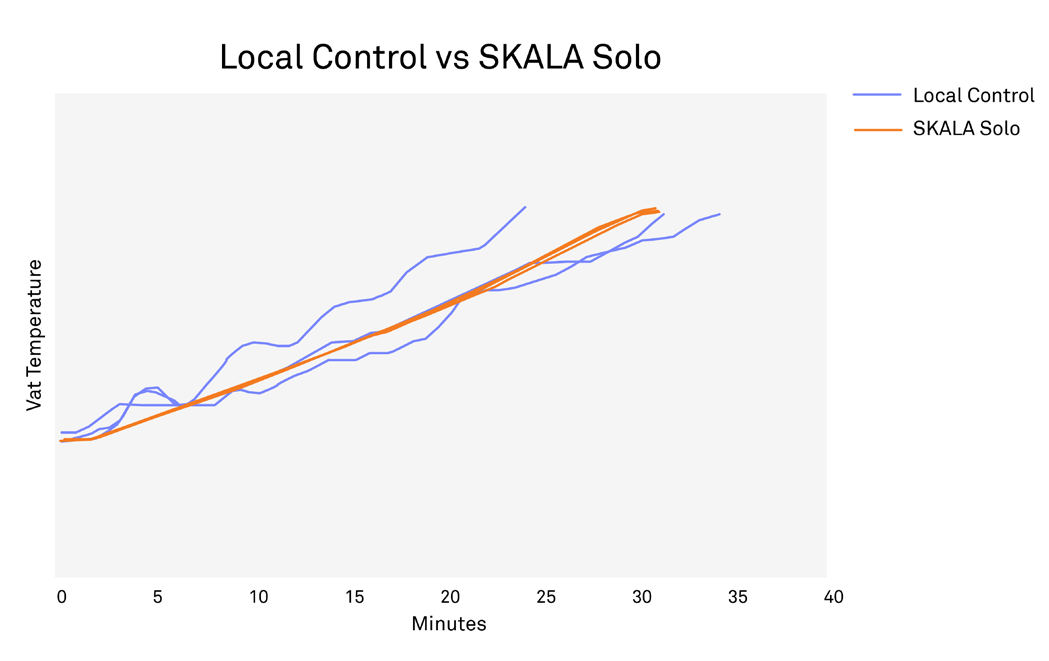
Figure 3. Compares SKALA Dry control to local control
Comparison of local control to SKALA Dry control
Figure 4 shows an actual temperature and steam valve profile during a cooking step. The PID control has the steam valve modulating as much as 45 to 50 percent. At several points the temperature is increasing at 0.7 to 1.1 degrees per minute versus a straight line average rate of 0.33 degrees. Following these high rate periods the vat temperature actually cools before continuing to increase.
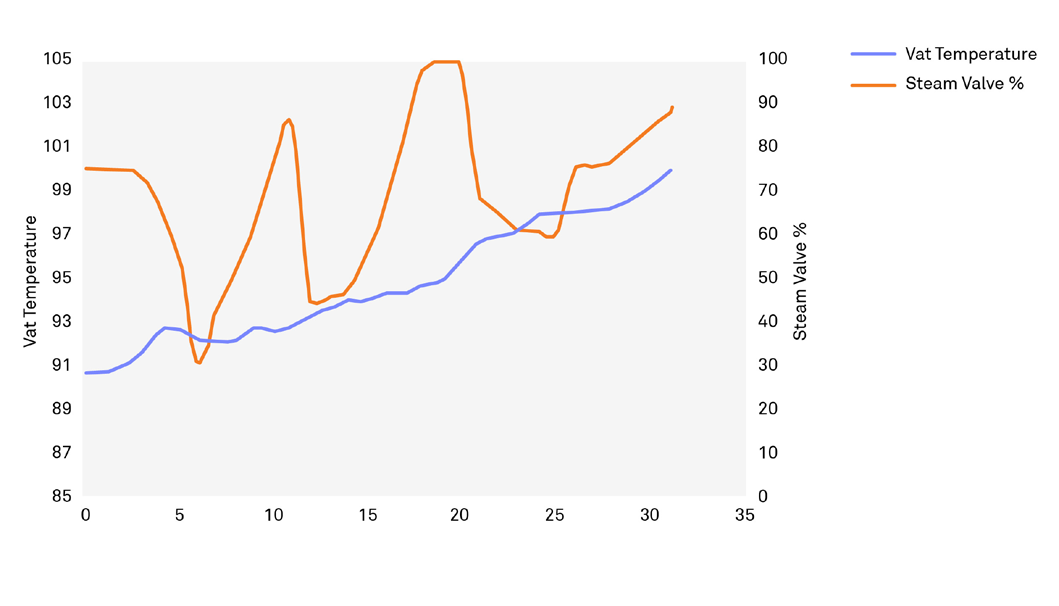
Figure 4. Typical temperature and steam profile
These early high temperature increases will cause problems in maintaining good curd consistency. Figure 5 shows five consecutive cooks that were controlled by the SKALA System. The vat temperatures follow the same path and have smooth consistent increases in temperature. The steam valve outputs also follow smooth and similar paths with some deviation to account for cook to cook changes. Notice that the rate of increase in the vat temperature slows as it approaches the final temperature. This function prevents the temperature from overshooting the final temperature set point.
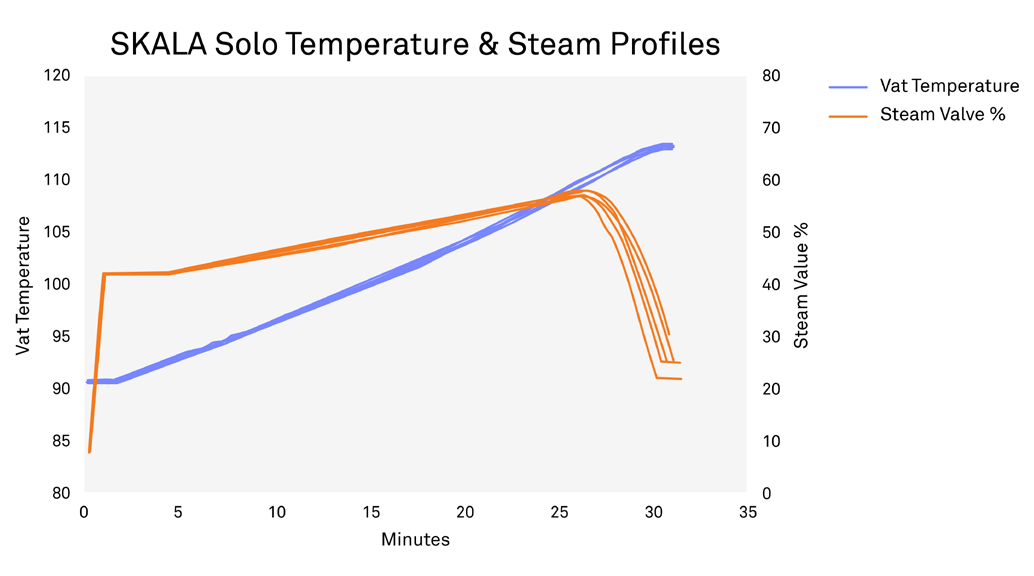
Figure 5. SKALA Dry temperature and steam profiles
Benefits
Using the SKALA Dry control, the vat temperature profiles are repeatable from cook to cook and vat to vat. The SKALA Dry allows the cheese maker to select a temperature curve or profile, using a single factor. The smooth control of the steam valve eliminates the sharp increases in the steam valve that cause brief high rates of vat temperature increase. Steep temperature increases early in the cooking step could cause the expulsion of solids with the whey and cause case hardening of the curd.
The SKALA Dry system also prevents overshooting the final temperature set point. With the improved temperature control and the ability to repeat the time and temperature profile, the final cheese moisture should be more consistent, giving an opportunity to maximize the moisture content. There should be less variability in all downstream processes, such as salting, with improved curd moisture content. The last two charts are Six Sigma charts showing the actual improvements of the SKALA Dry system concerning total cook time and final cook temperature.
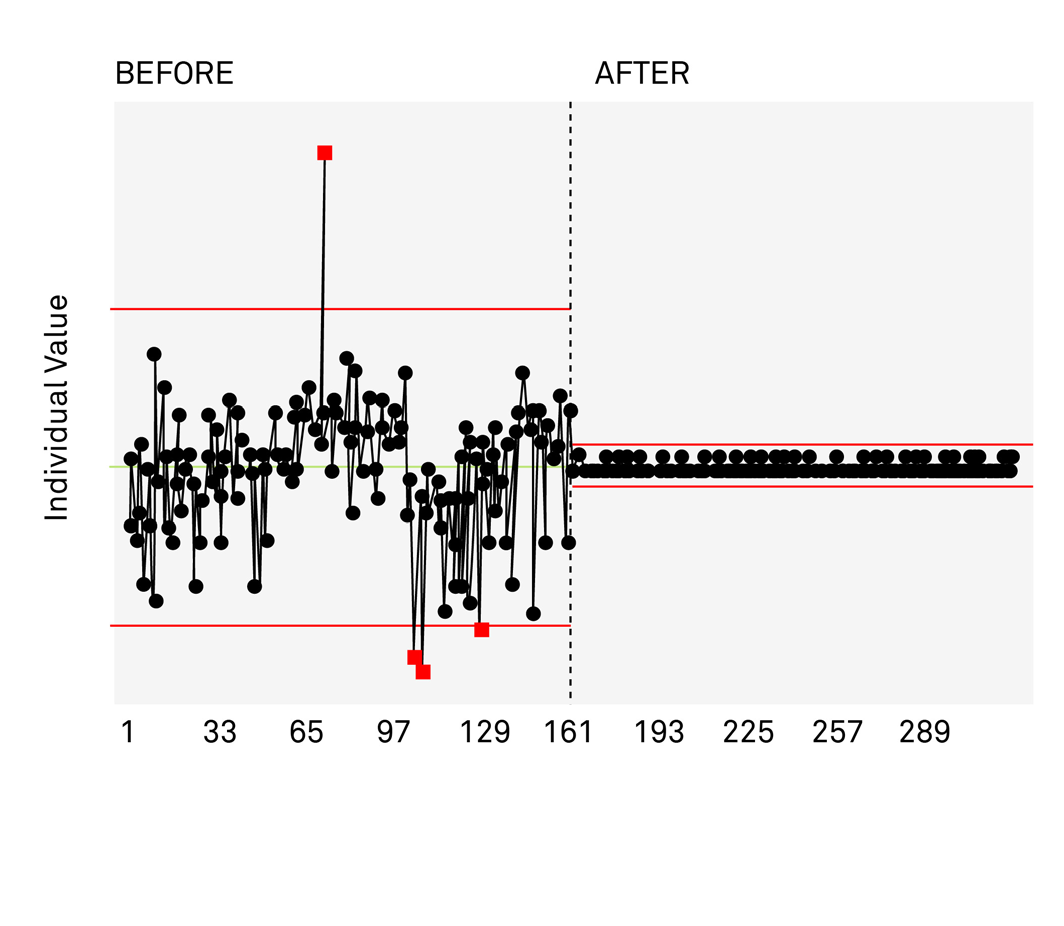
Six Sigma before/after chart 1 — individual value control chart across vats
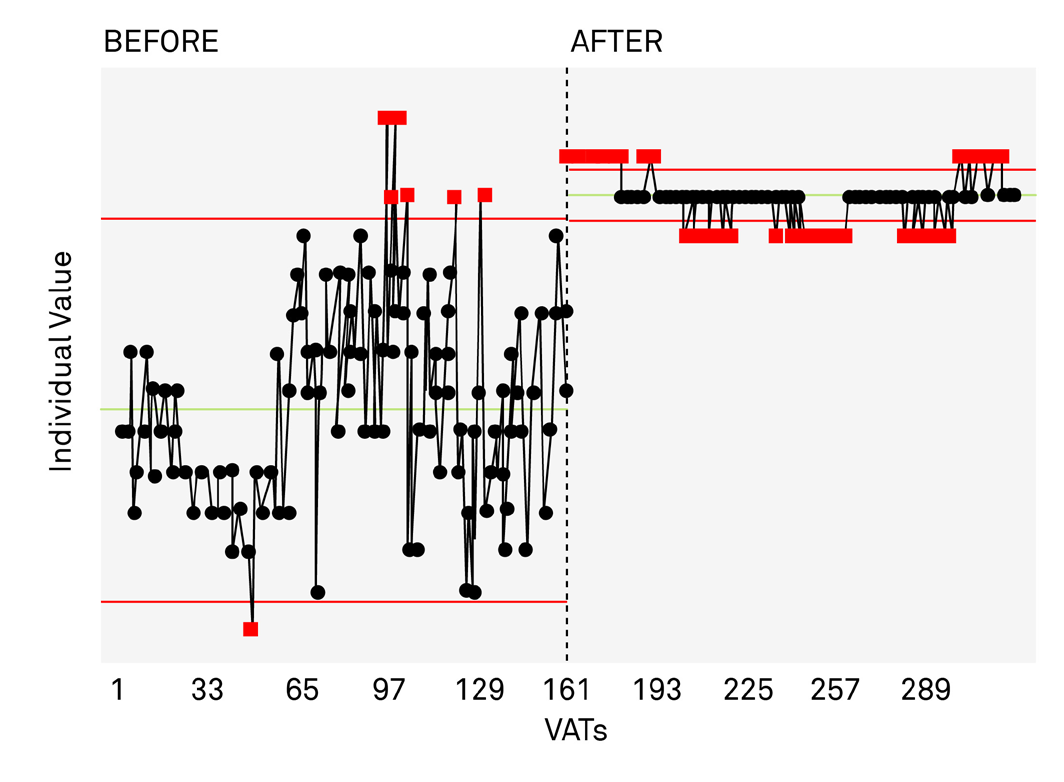
Six Sigma before/after chart 2 — individual value control chart across vats
Contact information
AQUALAB by Addium Inc. — 1300 Henley Court, Pullman, WA 99163, USA. Phone: +1.509.332.6000. Email: [email protected].
Newsletter signup
Case studies, webinars, and articles you'll love.
Receive the latest content on a regular basis!