SKALA Dry Moisture/Dryer Control System: Spray & Flash Dryer Control
The SKALA Dry Moisture/Dryer Control System is a model-based control system that senses moisture inside the dryer and provides early and precise control response.
Inside the dryer moisture sensing
The SKALA Dry Moisture Control system consists of a model based control algorithm that allows moisture sensing of the product inside the dryer. The SKALA Dry uses two temperature sensors inside the dryer to sense the moisture content of the product and make control changes to correct the moisture while it is still in the dryer.
The patented SKALA Dry Moisture Control System is based on a model that relates the moisture content of the product leaving a dryer to the temperature drop (ΔT) and production rate. The temperature is measured before and after contact with the product during drying and the difference (ΔT) between the two is used in the model to calculate the change in moisture and make a control response. Figure 1 illustrates the SKALA Dry method and typical locations of temperature sensors. The SKALA Dry model can be considered a soft sensor for measuring moisture of the product inside the dryer. Figure 2 shows the product moisture calculated by a SKALA Dry soft sensor versus an online NIR moisture meter.
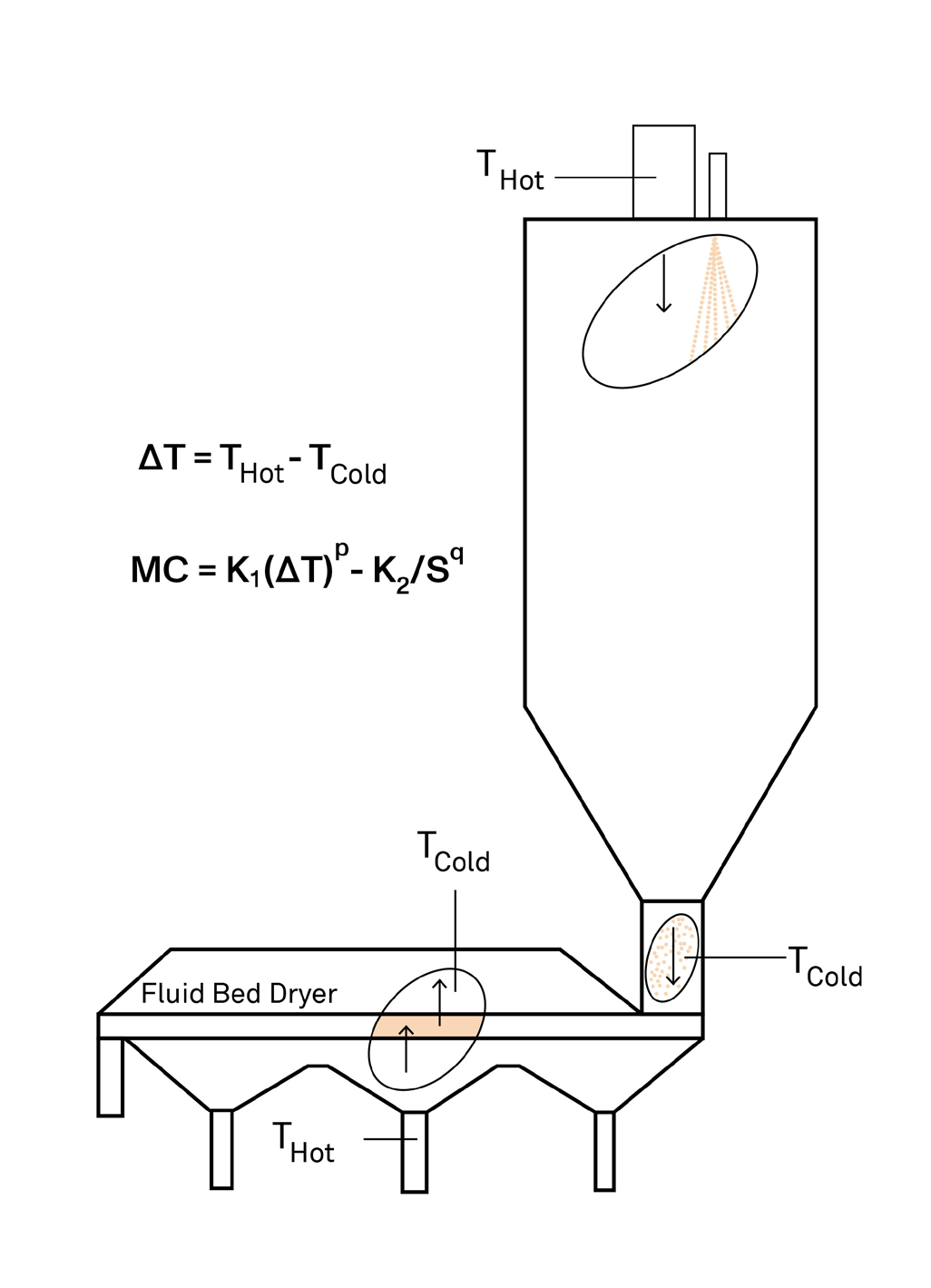
Figure 1. SKALA Dry model — spray and flash dryers. ΔT = T_Hot − T_Cold; MC = K₁(ΔT)^p − K₂/S^q
SKALA Dry applicable to spray dryers
The SKALA Dry control system uses the difference in the inlet and outlet air temperatures to sense the changes in moisture and dryer load. The difference, or Delta T, is used in a model-based algorithm to correctly adjust temperatures or feed rate as upsets or changes to dryer load are detected.
The traditional methods for controlling spray dryers are to control temperature or feed rate to maintain the outlet temperature set point. One method used is to adjust the inlet temperature to maintain an outlet temperature set point. The other method is to hold the inlet temperature constant and adjust the feed rate to maintain the outlet temperature set point. These methods result in control in the right direction, however the outlet temperature set point must be manually changed to maintain the target moisture after load changes. These traditional methods have no theoretical basis for moisture control, but only make a move in the right direction. The theoretically-based SKALA Dry model has the ability for recalculating new process variable (ΔT) set points needed to maintain the target moisture following evaporative load changes to the drying process.
A fluid bed dryer following a spray dryer can be controlled independently of the spray dryer and provide additional control of final moisture.
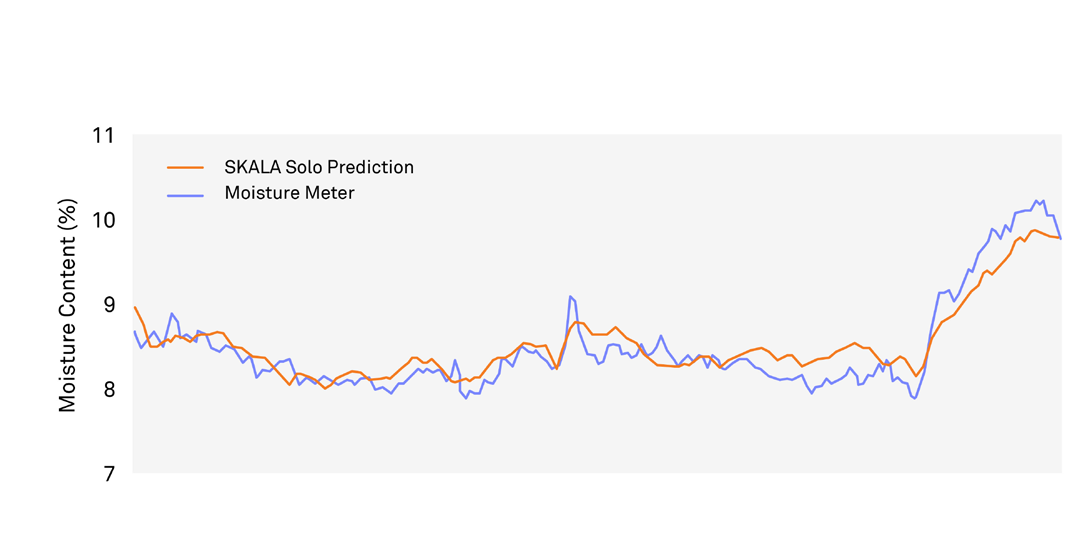
Figure 2. SKALA Dry predicts moisture — SKALA Dry prediction versus moisture meter
Reduces dead time
The proper location of the temperature probes in the dryer allows the SKALA Dry to become an ‘inside the dryer’ moisture sensor. By sensing the changes in moisture at a point inside the dryer and making control responses, the dead time is greatly reduced. As seen in Figure 1, the SKALA Dry will detect the change in moisture and respond to the change in less time than systems using conventional methods, such as down-stream moisture meter/sensor or hand sampling.
The moisture variance caused by process upsets is proportional to the dead time between the time of the upset and the time of detection and response. Therefore, by reducing the dead time with early detection and response the moisture variance is also reduced. Normally, the reduction of variance realized with the SKALA Dry system is 30% or more. Figure 3 illustrates the location and dead time reduction of the SKALA Dry method on a fluid bed dryer.
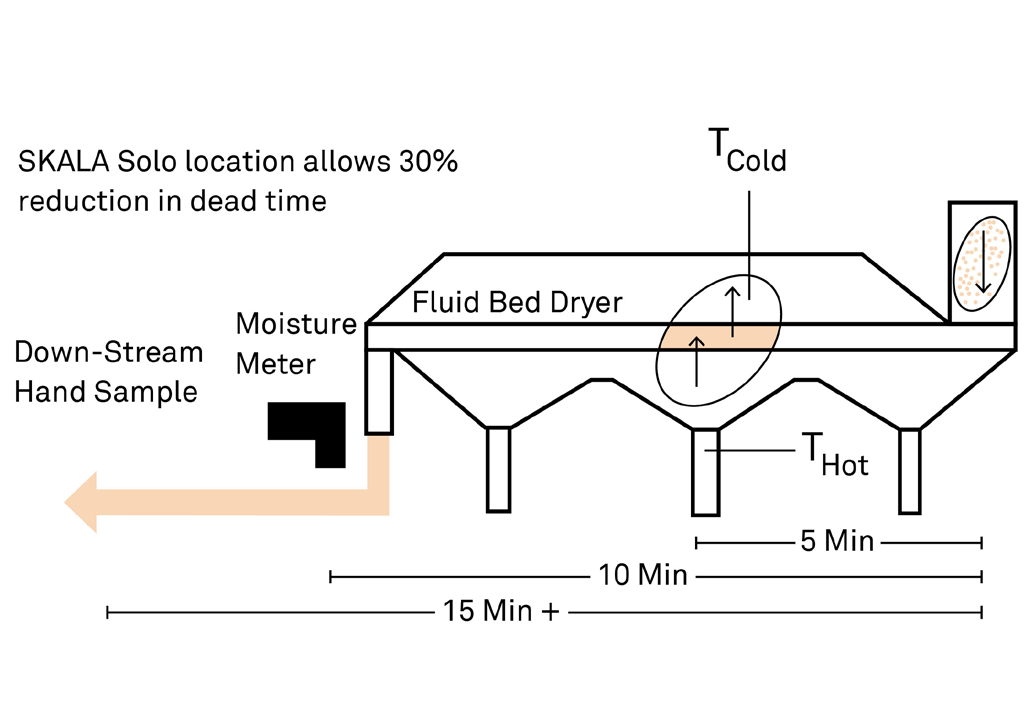
Figure 3. Reduction in dead time — SKALA Dry location allows 30% reduction in dead time versus down-stream hand sample
Benefits
Most often the average moisture content of dried product is low due to lack of good control and the product is over-dried to be safe. The SKALA Dry system will reduce the moisture variation, thus allowing the moisture content to be increased and safely stay below the upper control limits. This increase in mean moisture will give a better quality product, a production increase, and an energy savings. Figure 4 shows the reduction in overall moisture variance and Figure 5 illustrates safely increasing average moisture content, thus providing a production increase.
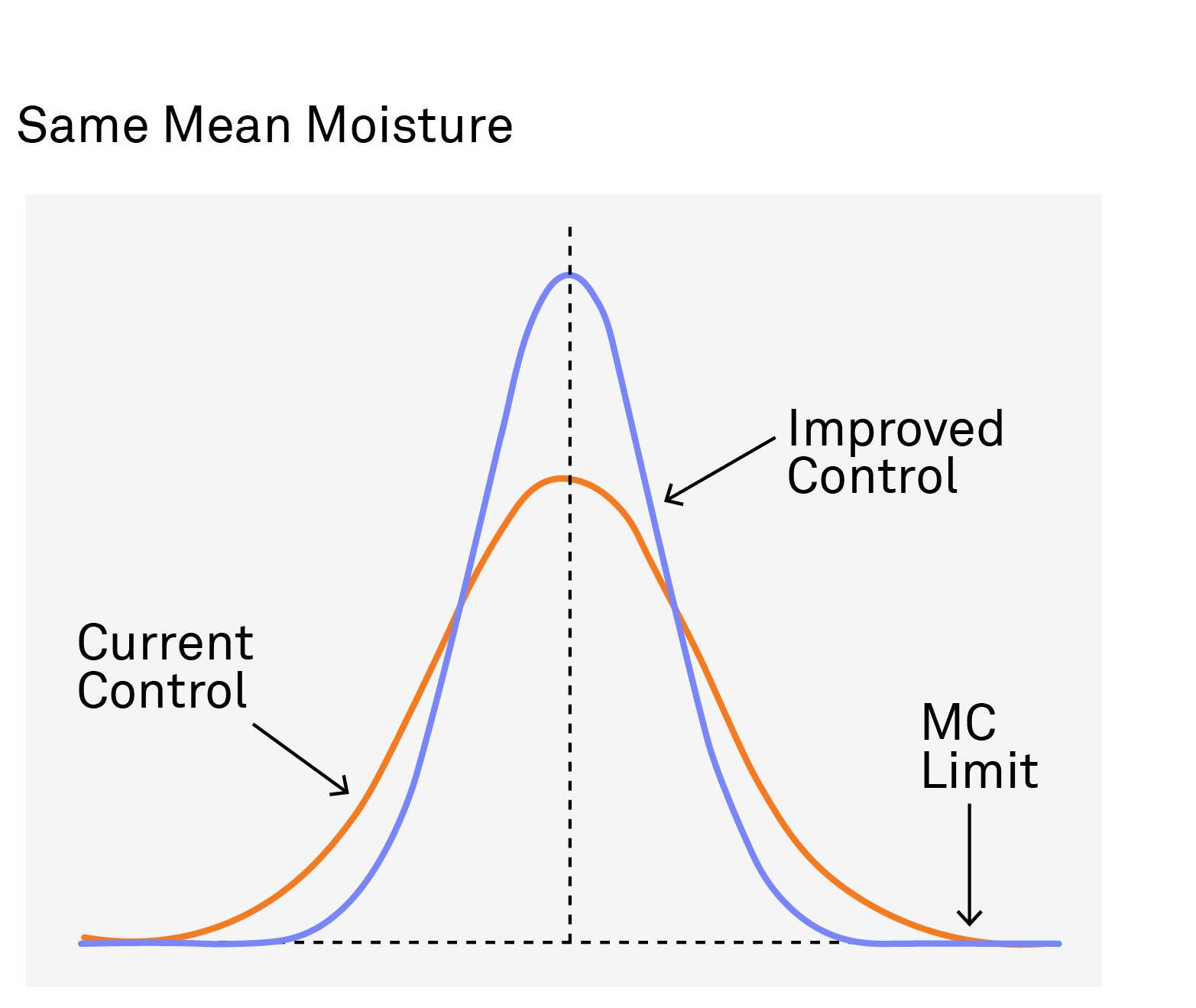
Figure 4. Reduction in moisture variation — same mean moisture, improved control versus current control
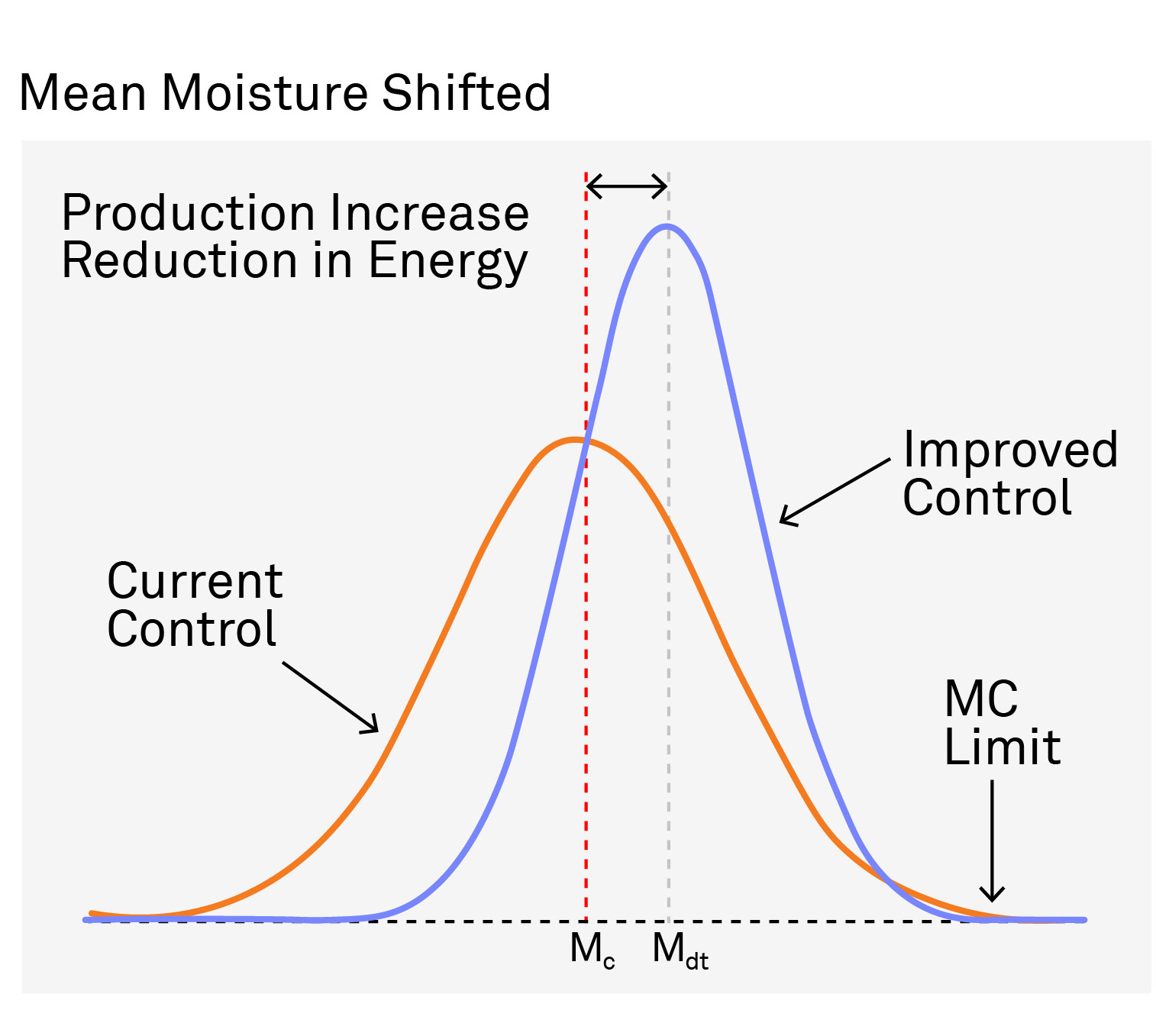
Figure 5. Possible shift in average moisture — mean moisture shifted, showing production increase and reduction in energy
Contact information
AQUALAB by Addium Inc. — 1300 Henley Court, Pullman, WA 99163, USA. Phone: +1.509.332.6000. Email: [email protected].

Newsletter signup
Case studies, webinars, and articles you'll love.
Receive the latest content on a regular basis!