Solving the water problem in gummies
.jpg)
Why water matters in gummies
For gummy makers, water is both a hero and a headache. It’s what keeps gummies soft, chewy, and shelf-stable—but it’s also the reason they can spoil, weep, or dry out too fast. And the problem is only getting trickier. Today’s gummies are more than candy: they deliver vitamins, plant extracts, and even medicine. That means sugar is being swapped for low-glycemic syrups, and gelatin is often replaced with pectin or agar. These swaps make gummies healthier and vegan-friendly, but they also make water harder to manage. That’s where water activity (aw) and moisture sorption isotherms come in. They give manufacturers the insights needed to control water, avoid costly bottlenecks, and produce gummies that stay fresh and consistent.
The big challenges
1. Shelf life & safety
If water activity is too high, microbes grow. Too low, and gummies harden. Relying only on Brix (sugar concentration) is risky—it doesn’t tell the full story.
Fix: Use water activity alongside Brix. Brix is fine for quick cooking checks, but water activity is the real measure of safety and shelf stability.
2. Texture & syneresis (weeping)
Sugar-free or vegan recipes change how water binds. For example, tapioca syrup doesn’t hold water as well as sucrose, so gummies can leak liquid over time.
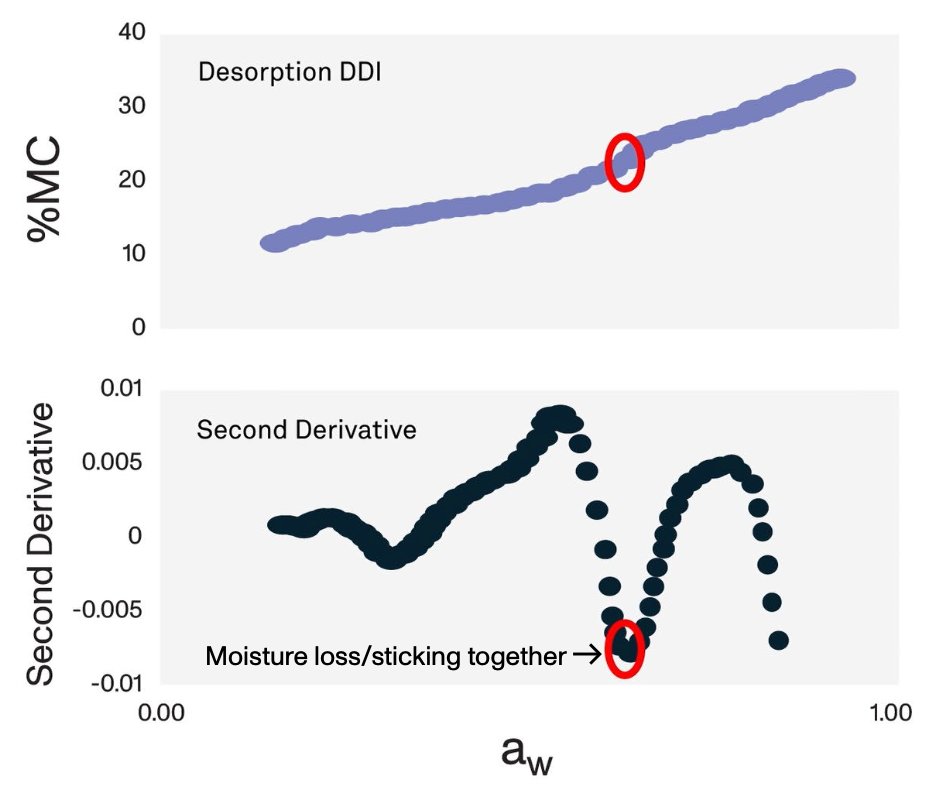
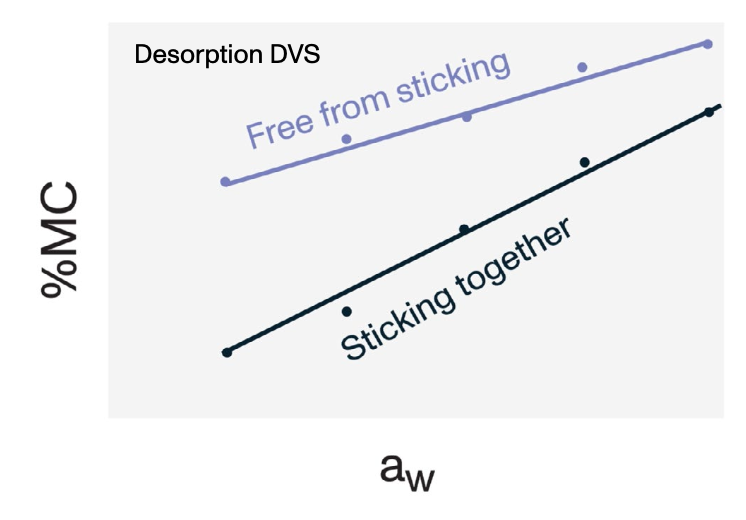
Fix: Moisture sorption isotherms show how your gummies interact with moisture. With this data, you can spot risks, tweak recipes, and set process targets that keep gummies stable.
3. Drying delays
Drying is one of the biggest bottlenecks. Too much moisture going in means long, unpredictable drying times. Over-dry the outside, and you get case-hardening that traps water inside.
Fix: Moisture sorption isotherm data (Figure 1 and Figure 2) reveals how humidity affects drying rates. Use it to tune room conditions, avoid case-hardening, and set water activity endpoints that balance speed and quality.
A smarter way forward
- In R&D, build moisture sorption isotherms for each formula to set water activity specs to maintain desired texture without syneresis occurring while also guiding packaging optimization and shelf life predictions.
- During cooking, drying & curing, use Brix for speed, but confirm with water activity measurements to reduce product variation.
- During packaging, storage, & shelf life, let water activity be the gold standard for safety and stability.
Understand that water activity will change over time due to environmental conditions (mainly humidity and temperature) and recognize the importance of picking the appropriate packaging water vapor transmission rate (WVTR). Each gummy recipe is unique, so pilot batches should define product-specific water activity targets that balance safety, shelf life, and chew.
And don’t forget: mismatches between Brix and water activity can reveal process errors early—saving wasted batches and drying room backlogs
Conclusion: making water your ally
Water will always be a tricky part of gummies. But with water activity testing and moisture sorption profiling, it becomes a tool—not a threat.
By putting these methods to work, manufacturers can:
- Extend shelf life safely
- Prevent syneresis and texture problems
- Shorten drying times
- Optimize drying and curing steps
- Keep products consistent across sugar-free, vegan, and functional gummies
In a competitive market, mastering water isn’t just quality control—it’s a competitive edge.
Technical questions? Looking for more scientific insights?
Reach directly out to AQUALAB’s scientists:
Zachary Cartwright, PhD
Principal Food Scientist
[email protected]
Mary Galloway
Lab Director
[email protected]
Newsletter signup
Case studies, webinars, and articles you'll love.
Receive the latest content on a regular basis!