Market insights
Water activity applications in sugar quality assessments
.jpg)
Sugar producers often face problems with caking and clumping during storage and shipping. These irreversible changes reduce flowability, upset customers, and cause expensive losses when bulk sugar has to be reprocessed or discarded.
Traditionally, moisture content has been used to track stability. But moisture alone can’t explain how sugar behaves in real environments. Water activity (aw) gives a clearer, predictive view of caking risk.
Why water activity matters
- Moisture vs. Water Activity: Moisture content is the total water present, but doesn’t show how it behaves. Water activity is the energy of water, tied to equilibrium relative humidity (ERH). Since sugar cakes when it is exposed to changing relative humidities, aw is the real driver.
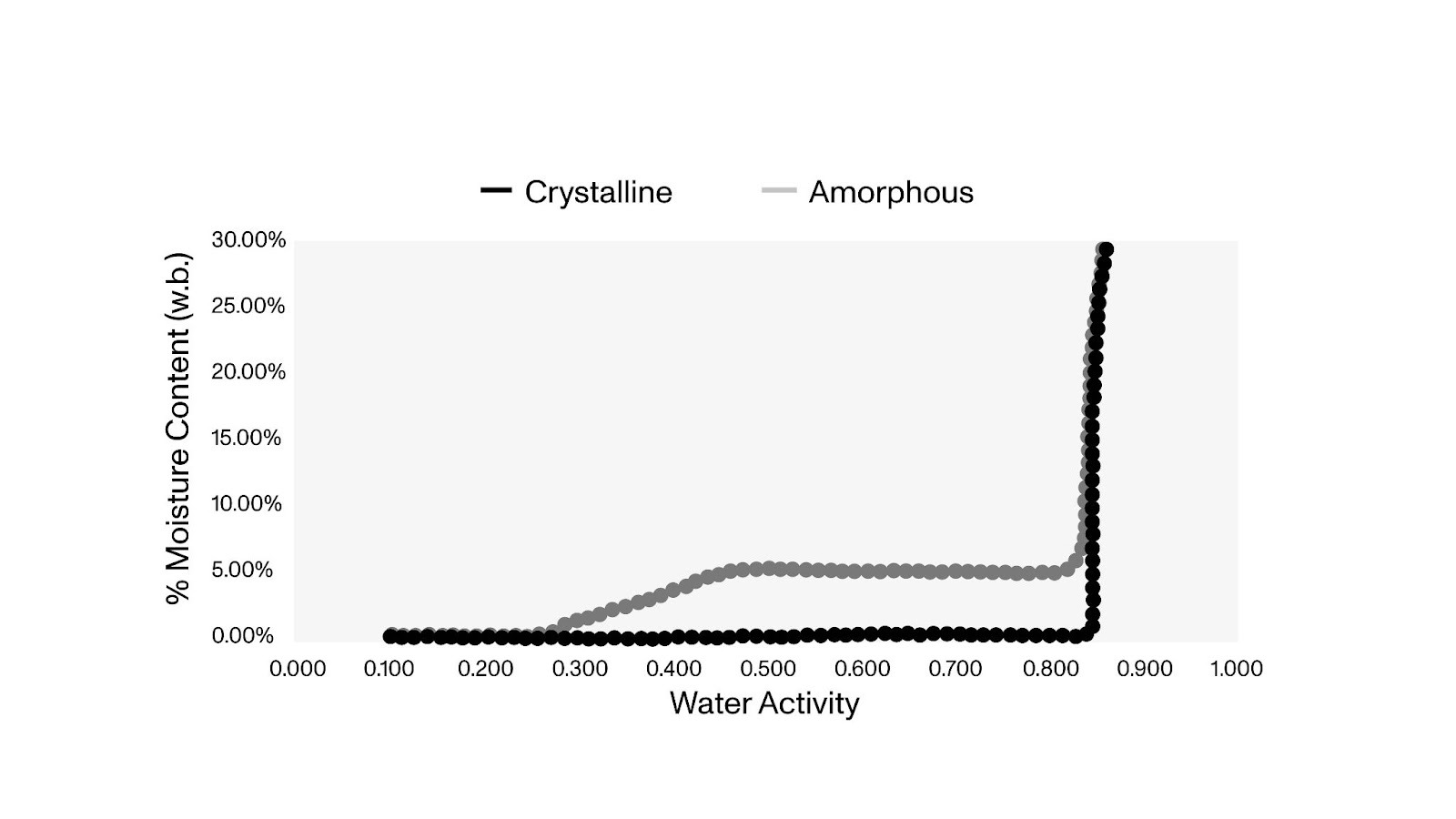
- Delequecence: Crystalline sucrose is stable up to ~82–83% ERH (aw ≈ 0.82) as shown in Figure 1. Above this, sucrose begins to dissolve or deliquesce.
- Caking: Caking and clumping can form at lower aw/RH and are affected by several factors including temperature and changes in storage humidity.
- Predictive Power: Monitoring water activity lets QA teams catch problems before visible clumping starts—something moisture content alone can’t do.
How caking happens
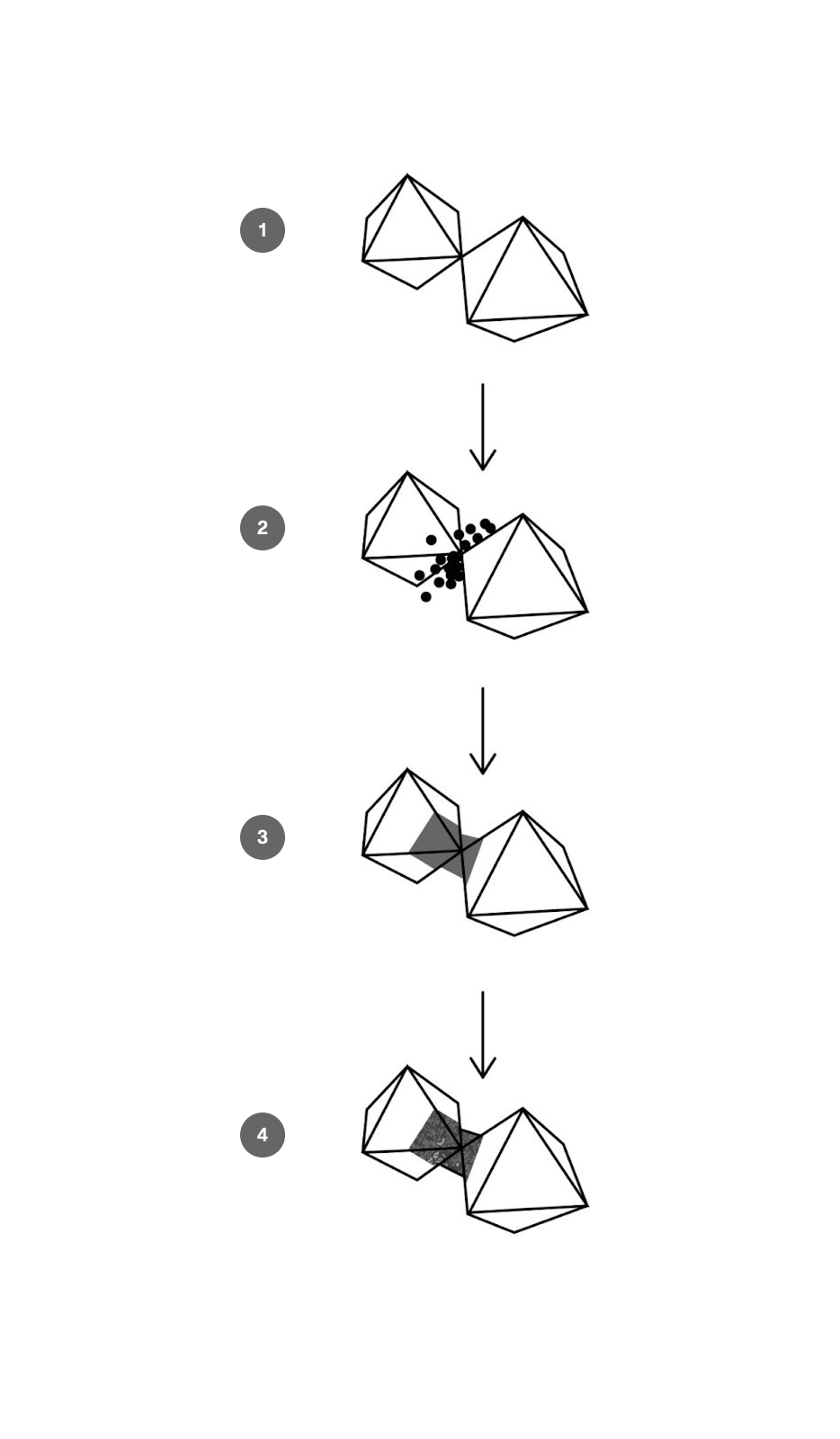
Studies show four stages:
- Pendular – Dry, free-flowing crystals.
- Funicular – Thin water films; particles start sticking.
- Capillary – Water bridges grow; flow is reduced.
- Drop – Irreversible caking from dissolution/recrystallization (Figure 2).
Key drivers:
- Fine dust particles adsorb more water.
- Temperature and relative humidity swings promote condensation.
- Storage pressure squeezes particles together, making water bridges increase.
Once lumps form, they can’t be undone—the original flowability is lost.
Using moisture sorption isotherms
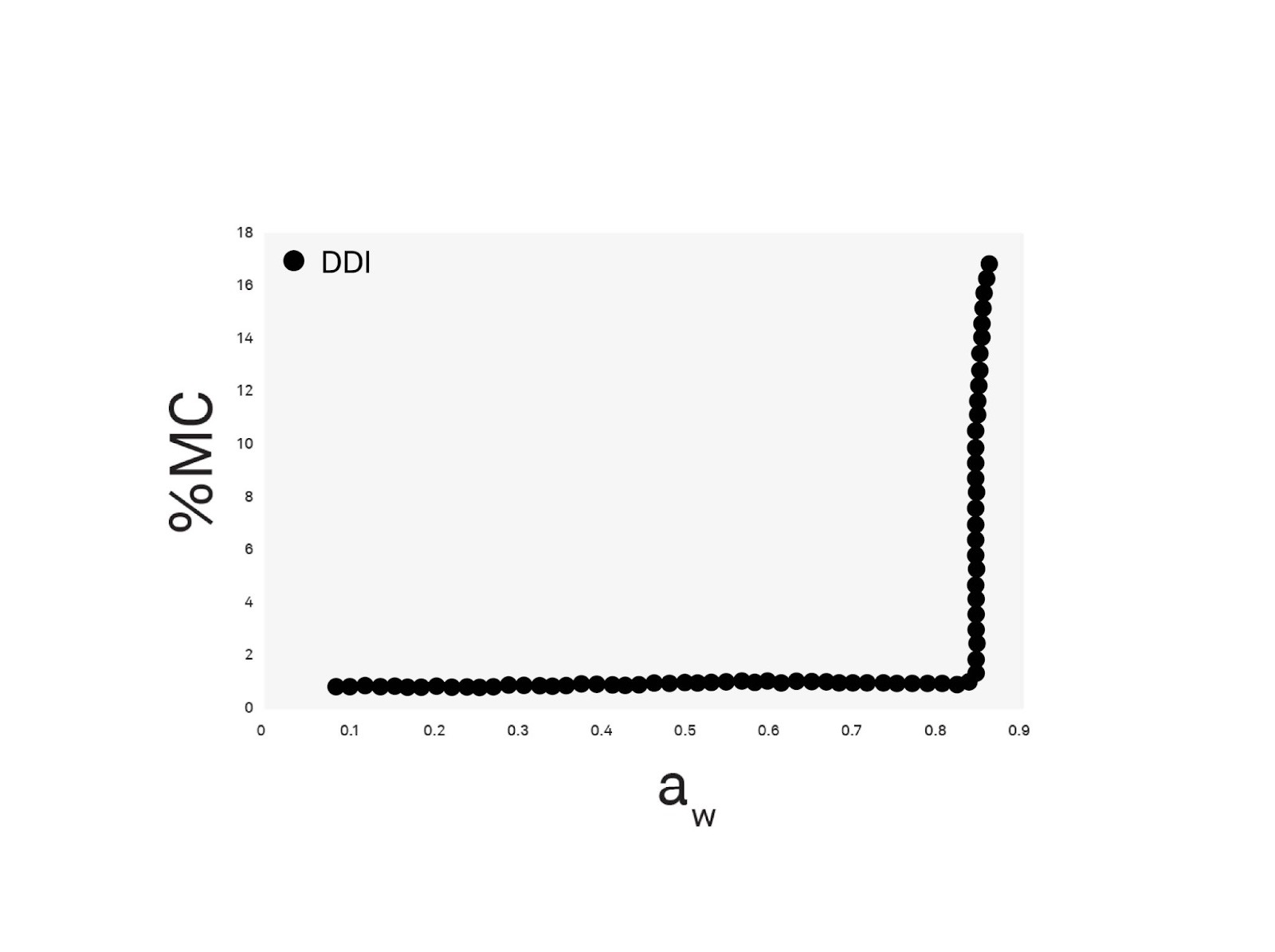
Moisture sorption isotherms show how sugar adsorbs or releases water at different humidities and temperatures. High-resolution Dynamic Dew Point Isotherms (DDI) reveal critical points of stability.
Applications:
- Stability: Pinpoint caking and/or deliquescence points (Figures 1 and 2).
- Packaging: Choose barrier films that keep aw below unwanted transition points, or within a specific range to minimize or prevent clumping.
- Storage: Define safe relative humidity and temperature ranges.
- Shipping: Anticipate risks from humid ports, tropical climates, or container condensation.
The cost of caking
- 5–10% of global sugar suffers serious water uptake, leading to caking, handling failures, and complaints.
- Caked sugar develops 3–4 times higher shear stress, making unloading and packaging very difficult.
- For a large refinery, a single caked silo (50,000–100,000 tons) can mean millions of dollars lost.
Practical takeaways for QA/QC teams
- Use water activity meters to screen batches before storage or shipping.
- Validate packaging choices with moisture sorption isotherm data.
- Monitor silo curing to confirm safe equilibrium before dispatch.
- Reduce customer complaints by ensuring sugar stays free-flowing.
Conclusion
Water activity isn’t just an academic measure—it’s an essential control point in sugar quality. Combined with moisture sorption isotherms, it provides the science to guide packaging, storage, and shipping.
Ignoring water activity leads to irreversible caking, lost profits, and damaged trust. Controlling water activity safeguards product quality and brand reputation.
Contact Information
Reach directly out to AQUALAB’s scientists:
Zachary Cartwright, PhD
Principal Food Scientist
[email protected]
Mary Galloway
Lab Director
[email protected]
Newsletter signup
Case studies, webinars, and articles you'll love.
Receive the latest content on a regular basis!